
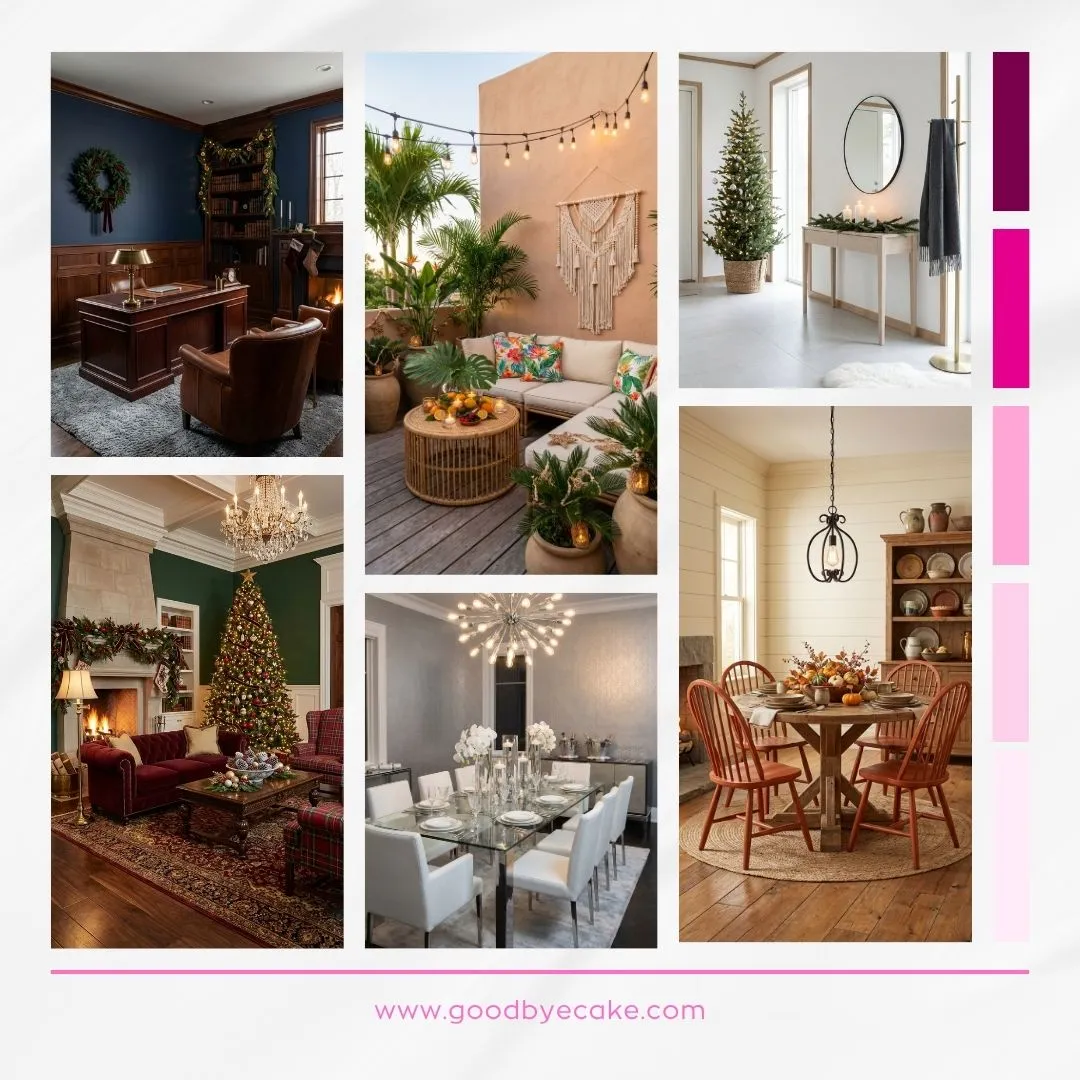
Honest cost ranges from Austin, Phoenix, and Atlanta projects — plus the specific things I warn homeowners about when they try to copy each look without the caveats.
After roughly twelve years of consulting on interiors out of Austin — and a few years before that helping friends figure out first rentals and first Christmases — I’ve landed on a quiet opinion about seasonal decorating: most of what the industry sells you is unnecessary. The winter-holiday decor market in the United States clears close to nine billion dollars a year, per National Retail Federation tracking, and an honest read of my client notes over the past decade says a sizeable share of that spend is redundant by year three.
What actually works is narrower. A dining room that genuinely hosts Thanksgiving and Christmas earns a seasonal refresh. A patio you sit on eight months of the year earns one. A guest bedroom nobody enters between January and October does not. The eight rooms in this piece cover four seasons and eight distinct styles, each with real cost ranges for the Austin market and honest notes on what I’ve watched clients hit when they try the same look in Phoenix, Atlanta, Seattle, or Minneapolis.
What’s in this piece
- Festive Traditional Living Room — the classic Christmas setup
- Minimalist Scandi Christmas — the quieter alternative
- Green & Gold Holiday Table — a tablescape for 8
- Rustic Harvest Gathering — the Thanksgiving dining room
- Dark & Moody Lounge — a fall or year-round living room
- Fresh Spring Kitchen — a March-to-May refresh
- Breezy Coastal Retreat — a summer living room
- Boho Patio Oasis — the outdoor room that earns its keep
- Honest cost-saving tactics
- What commonly goes wrong
- Frequently asked questions
1. Festive Traditional Living Room
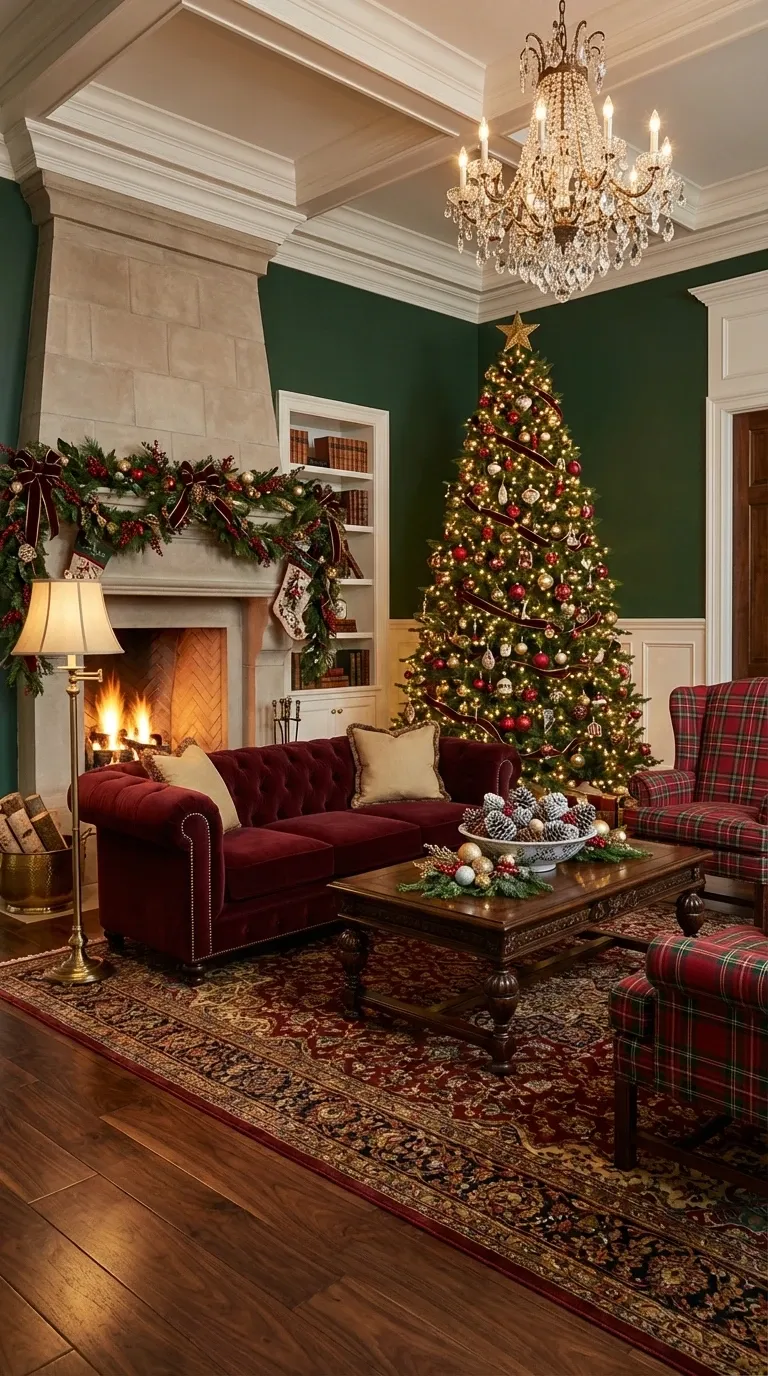
Hunter-green walls, a stone fireplace, a red velvet sofa, plaid armchairs, and a tree decorated heavily enough that the whole room orbits around it. This is maximalist traditional Christmas — the look that has been reprinted in magazines since the nineties because it actually holds up.
I’ve helped three clients build a version of this room since 2018 — a 1920s bungalow in Hyde Park, a 1940s ranch in Travis Heights, and a 1970s center-hall in North Austin. The look only reads right when the architectural bones match: heavy molding, a real fireplace or a well-built surround, and enough uninterrupted wall space to carry the green without the room feeling like a cave. In a builder-grade great room from 2015 with vaulted ceilings and limited wall, the same paint flattens out.
2. Minimalist Scandi Christmas
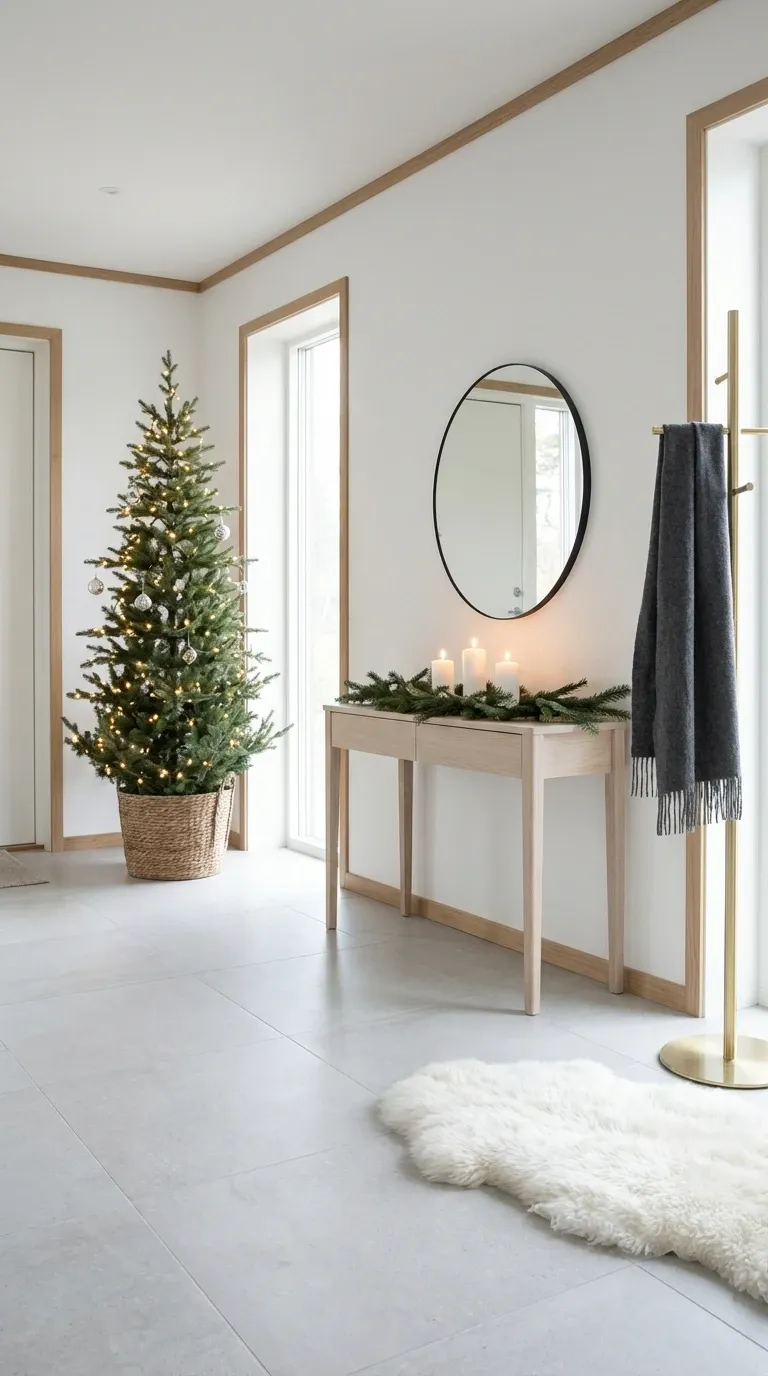
A light-oak console, a round mirror, and a sparse tree in a woven basket. No tinsel, no banister garland, no full red-and-green commitment. This is the entryway for the person who does not want the holidays shouting from the second they open the door.
I’ve seen this look work best in houses with cold December light — a north-facing entry in Seattle, a narrow foyer in a Minneapolis Craftsman — because the muted palette amplifies whatever natural light exists. In an Austin entry that gets strong south-facing afternoon sun, the same setup can read almost washed out. If you’re trying it in the south, push the oak tone one shade warmer than the reference images suggest.
What works
- Cheap to execute — under $1,500 if you already own the console
- Storage footprint is tiny (one basket, one light strand, one tree)
- Does not clash with the rest of the house’s non-holiday decor
- Photographs well in low winter light — why half of Pinterest’s December entries look like this
What doesn’t
- Reads empty to guests who expect maximalist holiday signaling
- Needs a genuinely clean entry — no coat pile, no mail pile
- Feels sad as a contrast if the rest of your house runs full-traditional Christmas
- White walls show every scuff; budget for a touch-up coat before December
Realistic total, starting from a bare entry: $900 to $2,400. The console and mirror are the long-term investment pieces; the tree-in-basket, the small sheepskin, and the garland can all be picked up for under $300 combined at Target, H&M Home, or IKEA’s December range.
3. Green & Gold Holiday Table for 8
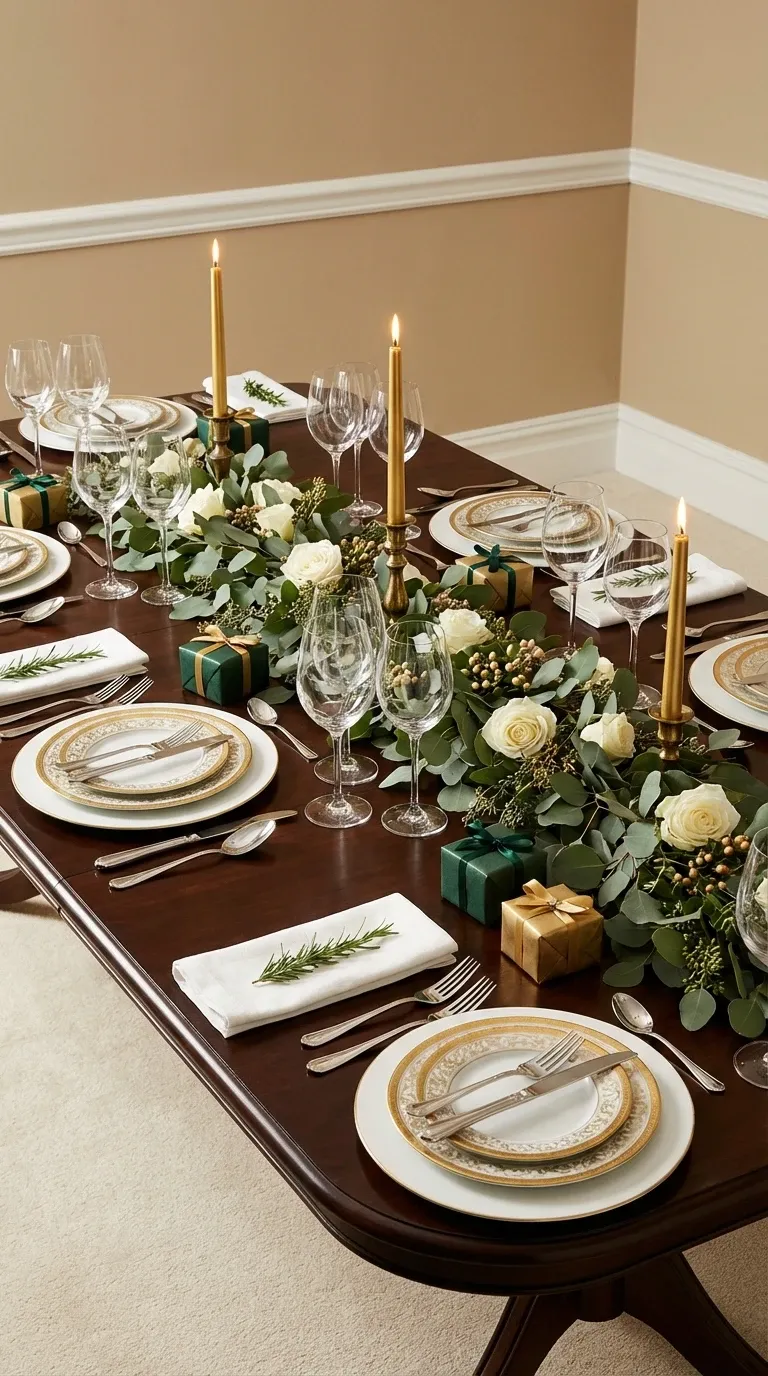
A fresh eucalyptus runner threaded with white roses, gold tapers at staggered heights, a small wrapped box at each place setting. This is the tablescape that gets photographed before guests arrive and still holds up two hours into dinner.
The tablescape most people abandon halfway through is the one with fresh flowers. They dry, they shed, and by dessert the host is apologizing for a brown eucalyptus leaf in someone’s water glass. If you’re not willing to set the greenery 40 minutes before guests arrive, use faux — good silk eucalyptus from Afloral runs about $35 a stem and photographs real.
Cost of this specific table (setting of 8)
| Item | Honest range |
|---|---|
| Fresh eucalyptus + garden roses (florist, Austin) | $150 – $220 |
| Gold taper candles + brass holders (set) | $120 – $250 |
| Gold-rimmed dinner plates (set of 8) | $320 – $640 |
| Linen napkins in forest green (set of 8) | $80 – $160 |
| Small wrapped place-setting gifts (x8) | $40 – $120 |
| Gold-tone flatware upgrade (set of 8) | $180 – $420 |
| Tablescape only | $890 – $1,810 |
For the wider picture of how a single dining room holds up across fourteen different decorating directions, the piece on one dining room in fourteen styles covers the same table re-dressed across a full stylistic spectrum.
4. Rustic Harvest Gathering
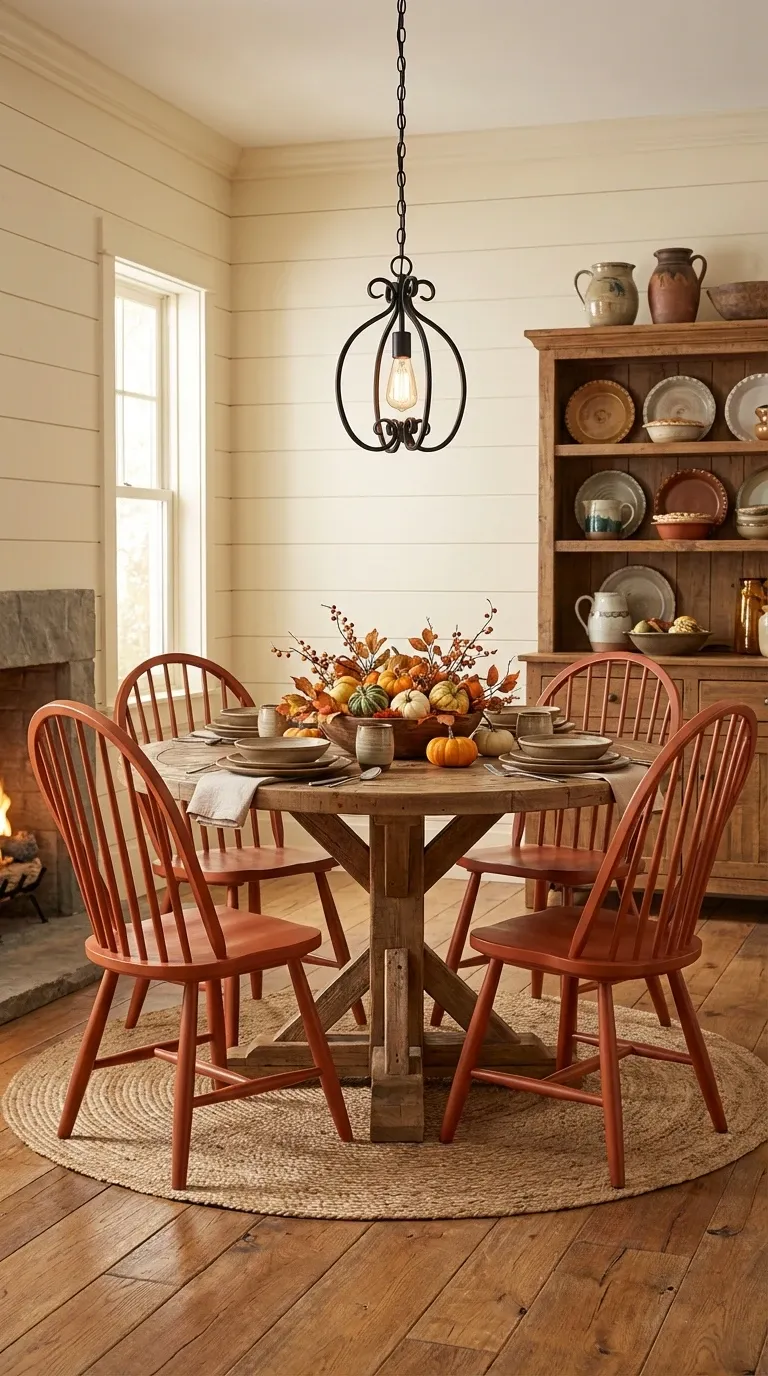
Shiplap walls, a round wood table, mismatched spindle chairs, a jute rug, and a centerpiece built from pumpkins, dried corn stalks, and branches. The Thanksgiving dining room for a house that already leans farmhouse year-round.
The honest version of this look costs almost nothing to execute seasonally if the room’s bones already read rustic. The one-time spend is the shiplap and paint installation — $2,000-$4,000 for a typical dining room in Austin, closer to $3,500-$5,500 in Seattle or Minneapolis where skilled carpentry labor runs higher. The seasonal layer (gourds, candles, the table runner) should come in well under $200 if you’re sourcing half of it from a local pumpkin patch or your own yard.
The fall palette that reads warm, not kitsch
Warmer than pure white; reads as a backdrop rather than a statement. Benjamin Moore White Dove or Sherwin-Williams Alabaster are the closest off-the-shelf matches.
A mid-warm wood with visible grain. A matte oil finish reads more authentic for this style than a high-gloss polyurethane that flattens the grain.
One or two chairs in rust-red ground the warm tones. Four matching red chairs tips into country kitsch — use this color sparingly.
Natural tones from real pumpkins and jute. This is the layer that changes with the season — swap pumpkins for eucalyptus and white roses in December and the same room shifts to Christmas.
5. Dark & Moody Lounge
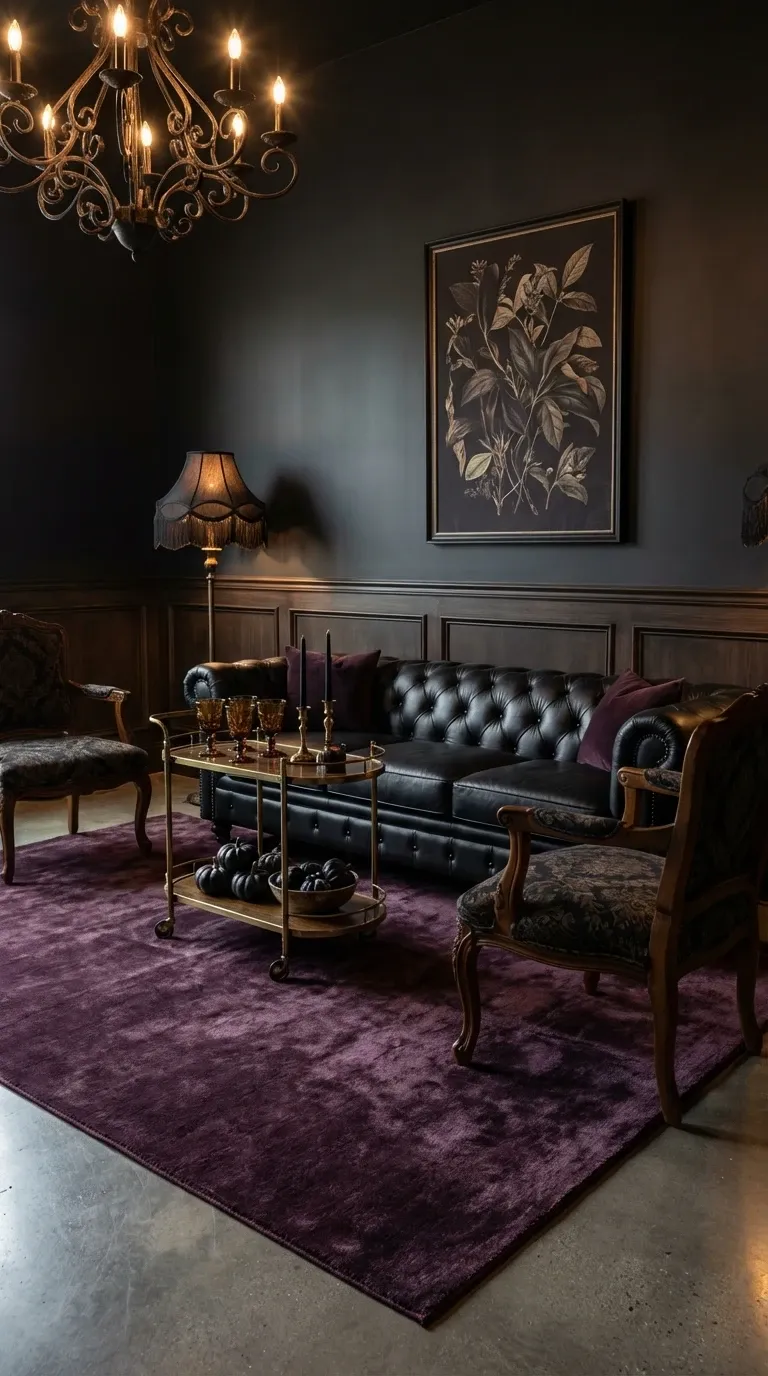
Black walls, dark walnut wainscoting, a tufted black leather sofa, a deep-purple rug, a brass bar cart, and subtle Halloween touches — black pumpkins, taper candles, dark botanical prints. A fall or year-round lounge for the homeowner who never bought the all-neutral advice.
- True black paint — not charcoal, not a grey-black. A real black reads more sophisticated. Benjamin Moore Black (2132-10) is the standard.
- Wainscoting to 40-42 inches — higher than traditional chair-rail height. That height is what gives the room its proportion.
- One saturated non-black accent — here, the purple rug. Without it, the room reads flat. The single accent is doing all the color work.
- Layered lighting, three sources minimum — chandelier, floor lamp, table lamp. Dark rooms die under a single overhead.
- At least one brass element — bar cart, lamp, drawer pull. Warms the palette and keeps it from reading funereal.
- Texture contrast — leather, velvet, aged wood, a knotted rug. Flat textures in a dark room read dead.
Total cost to build this room from a standard white-walled box, in the Austin market: $6,300 – $14,500. The heaviest line is wainscoting installation ($2,000-$4,500 depending on ceiling height and carpenter rates). The sofa and chairs are the next largest — $2,600-$6,000 combined for quality pieces.
If you’re working with a home office or library that already has dark wood paneling, a similar moody palette translates well — this piece on thirteen library renovations covers the adjacent territory in more detail.
6. Fresh Spring Kitchen
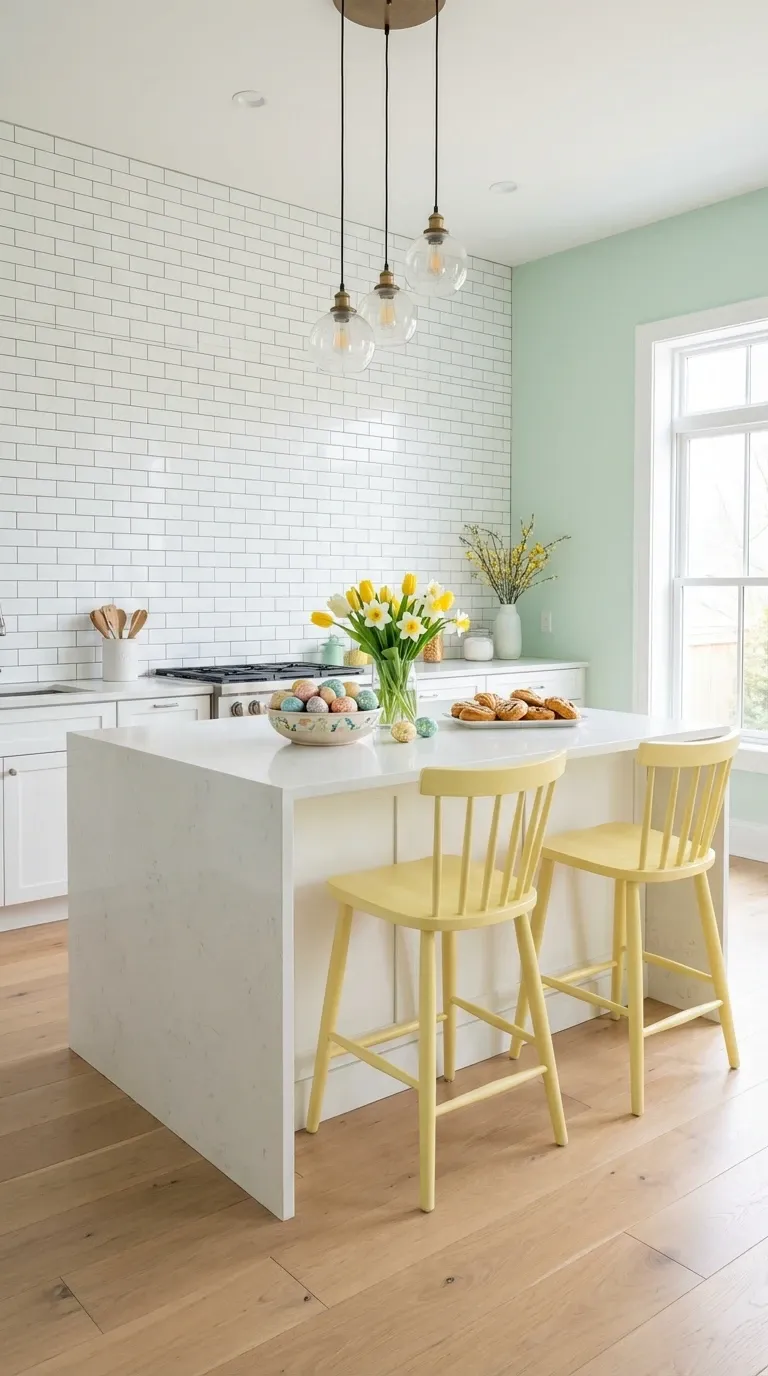
Mint walls, white subway tile, a white quartz island, two yellow spindle stools, and a simple seasonal refresh — tulips in a clear vase, a bowl of pastel eggs, a pile of fresh lemons. A March-to-May look for a kitchen that runs neutral the rest of the year.
I’ll be direct: this is the easiest room in the whole piece to pull off, because ninety percent of the work is the kitchen already being good. The mint walls are a single paint decision ($300-$600 in most markets); everything else is accessory-level cost. The spring “layer” itself is under $200 done honestly.
Why this works
- Easy to un-do — new paint color plus flowers, no permanent changes
- Photographs well because kitchens already have a clean backdrop
- The yellow stools can stay year-round or get repainted any accent color in year two
- Fresh flowers and citrus do most of the seasonal signaling — both are cheap
Where it stops working
- Mint green dates faster than most paint colors; by 2027, this exact hue may read early-2020s in photos
- In a north-facing kitchen with cold light, the mint tips toward sickly — test on the wall, not on a chip
- The mint + yellow-stool combination needs warm wood flooring to ground it; over grey tile it reads juvenile
- Fresh tulips last 5-7 days; weekly flower buys are part of the budget if you’re committing to the look
For a longer look at what kitchens can become when the bones get reworked — not just the surface — ten kitchen renovations from the same starting room covers the full spectrum from budget refresh to gut renovation.
7. Breezy Coastal Retreat
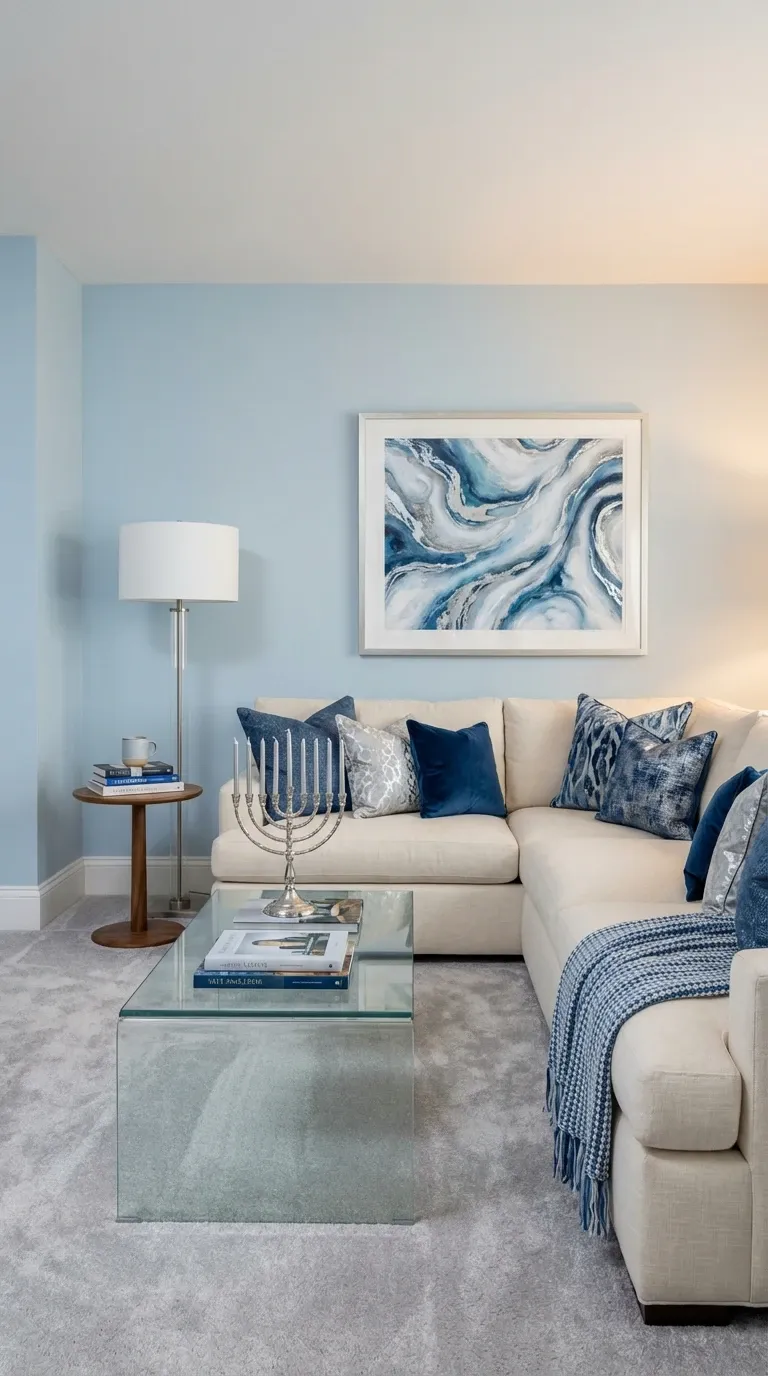
Light blue walls, a beige sectional, abstract wave art, a glass coffee table, and blue patterned pillows in at least three different blues. A summer living room for a house that does not live near the actual coast.
Coastal rooms are where homeowners most often overshoot. I’ve walked into living rooms with six shells on the mantel, a fake driftwood centerpiece, a rope-wrapped lamp, a decorative oar hung as wall art, and a sign reading “Beach House” — in a house three hundred miles from any beach. The version in the reference image works because it’s restrained: three blues, one material (linen), one piece of water-suggestive art, and everything else stays neutral. The restraint is the design.
The three-blue system
The palest blue — backdrop only. Sherwin-Williams Rainwashed or Benjamin Moore Palladian Blue land in this territory.
A mid-saturation blue that bridges pale walls and the deep accent. At least one pillow and one art element should hit this value.
The saturated note. Use sparingly — one large art piece and one throw pillow is the correct ratio. Four or five pieces at this value tips the room nautical in the bad sense.
The warm neutral that keeps the blues from reading cold. If the base is pure white, the room tips clinical; a warmed beige is critical.
Realistic total from a bare living room: $3,100 – $6,950. The sectional is 50-60% of the budget; everything else is accessible accessory pricing. A glass coffee table is under $500 at most retailers. A large framed print in this size runs $200-$400 from West Elm, Society6, or Minted.
8. Boho Patio Oasis
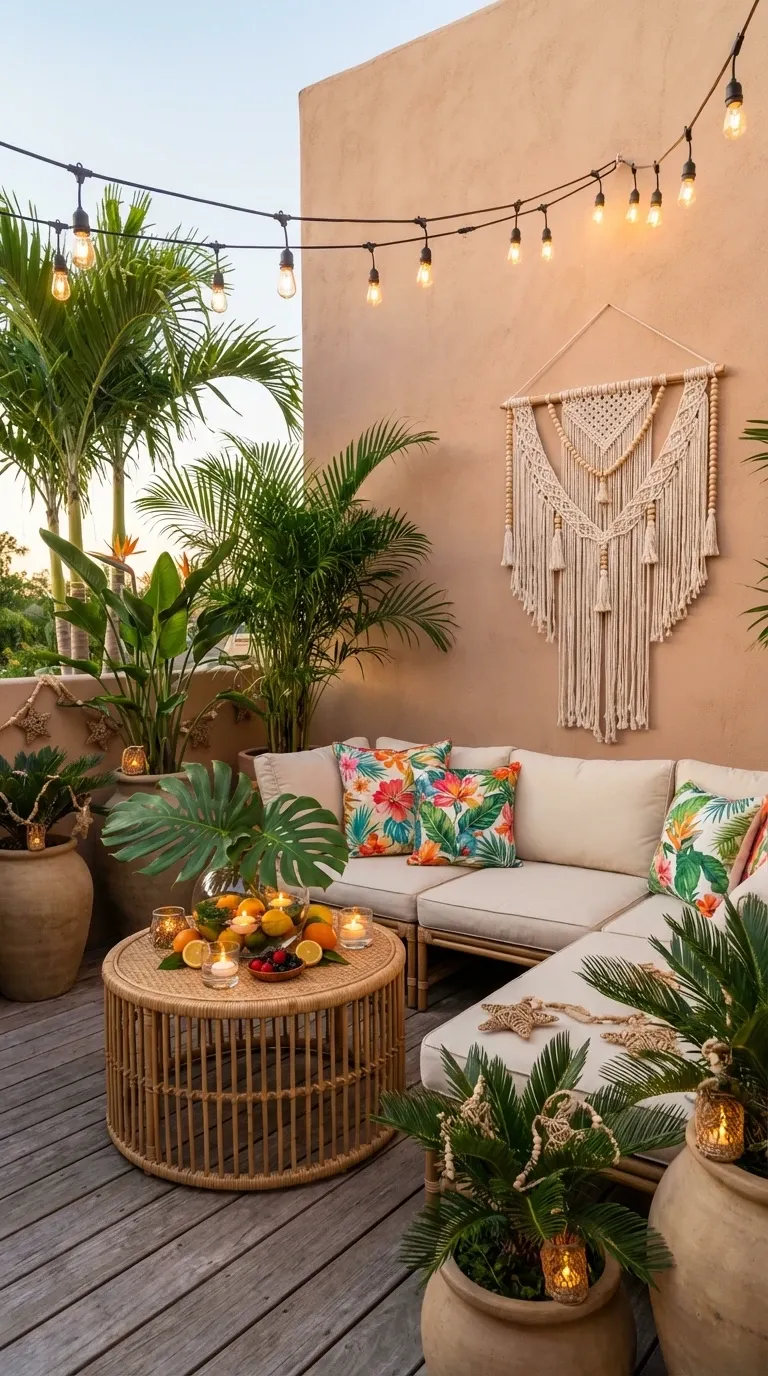
A rattan sectional, a macrame wall hanging, five or six potted tropicals, overhead string lights, and cushion fabrics with enough pattern to feel warm but not loud. The outdoor room that gets used between April and October in most of the country — and close to year-round in central Texas or Arizona.
- All-weather rattan, not natural. Natural rattan does not survive a single Austin summer. The synthetic all-weather wicker from Sunbrella or the Wayfair Patio Essentials line holds up for 5-7 years in direct sun.
- Cushion fabric matters more than the frame. Sunbrella-grade solution-dyed acrylic is the standard. Cheaper cushions fade within one summer of 100°F+ days.
- Plants in pots, not in the ground. For renters, obvious. For owners, also smart — you can move the arrangement and overwinter tropicals indoors.
- String lights on a dimmer or a smart plug. The single biggest upgrade. Full-brightness string lights wash the room out; at 30% they build the ambiance the photos are selling.
- A real outdoor rug. Polypropylene outdoor rugs from Ruggable or Safavieh hold up. Cheap jute, despite the aesthetic, molds after one heavy rain.
- Austin / Phoenix: tropical plants (monstera, bird of paradise) survive the summer in deep shade; in direct afternoon sun they scorch within weeks. Keep the container arrangement under a pergola or on the shaded side of a fence. Expect 2-3x the watering frequency compared to cooler climates.
- Atlanta / Charleston: humidity is the issue. Rattan handles it; cushion fabric mildews if it isn’t Sunbrella-grade. Store cushions indoors when not in use.
- Seattle / Pacific Northwest: mold and moss are the killers. Strong covers, elevated feet on all furniture, and an expectation of 4-5 months of real use rather than 8+.
- Minneapolis / upper Midwest: this setup gets three usable months. A $3,500 patio for 90 days of use is a different cost equation than the same patio in Phoenix — budget and expectations should reflect that.
For how an outdoor space gets re-thought from a bare concrete slab into something that functions as a room, twelve patio redesigns from a single starting slab covers the structural decisions (drainage, shade, flooring) that precede anything in this section.
- Buy after, not before. The 60-70% markdowns on Christmas decor hit the first week of January. The 50-60% markdowns on summer patio inventory hit the first week of September. Anyone who has bought “next year’s” holiday decor at full price in November has paid a tax they didn’t need to.
- Neutral base, swapped accessories. If your sofa, rug, and main case pieces are in a neutral palette, a full seasonal shift is a pillow swap and a throw swap. If your sofa is hot pink, you are locked in.
- Forage half the centerpiece. Branches from your own yard, pinecones from the park, river stones, dried grasses — natural materials cost nothing and photograph better than most of what sells at Hobby Lobby. One caveat: do not forage from protected areas or private land you don’t own.
- Rent instead of buy for once-a-year setups. Holiday china, specialty serveware, and even artificial Christmas trees can be rented in most metros now. Austin and Atlanta both have local party-rental services that include a full Christmas decor package for $200-$400. If you host Thanksgiving or Christmas dinner once a year and don’t need the items the rest of the time, the rental math beats the purchase math.
What commonly goes wrong
Five failure modes I see over and over, sorted by how much money they cost:
Sources & further reading
- National Retail Federation. Annual Winter Holiday Consumer Survey. Historical consumer spending data on holiday decorating by category.
- U.S. Bureau of Labor Statistics. Consumer Expenditure Surveys. Household expenditure patterns by region and season.
- National Fire Protection Association. Home Fire Statistics — Holiday Lighting. Fire-safety data referenced in the failure-modes section.
- American Society of Interior Designers (ASID). Industry Outlook Reports, 2023-2024. Residential design industry trends.
- HomeAdvisor / Angi Research. True Cost Guide. Regional labor and materials pricing used to sanity-check the cost ranges in this piece.
- Author notes: client-project cost data drawn from consulting engagements in the Austin, Phoenix, and Atlanta markets, 2014-2025.




No comment