
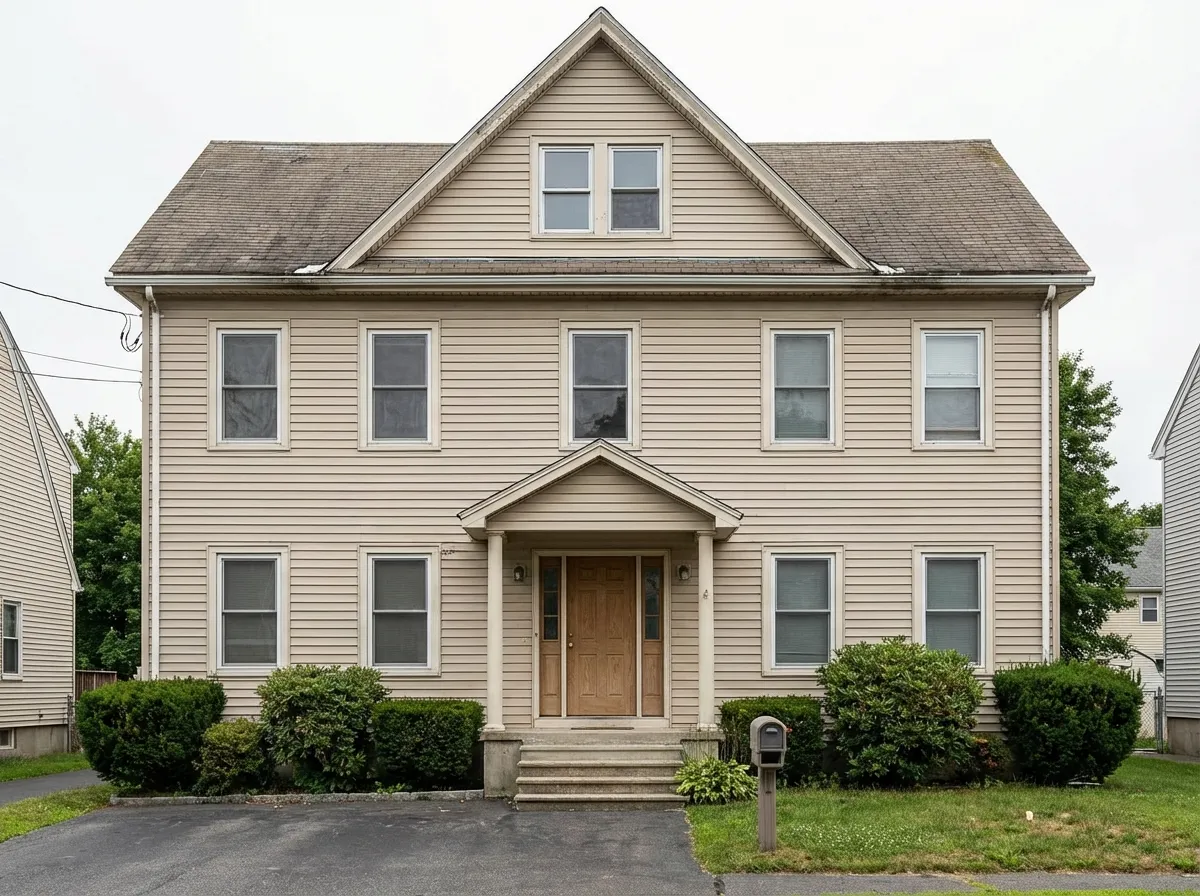
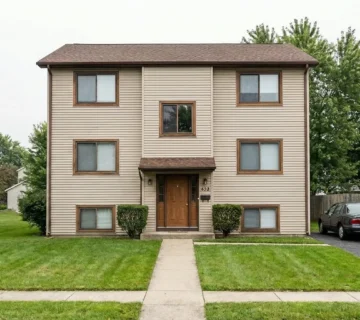
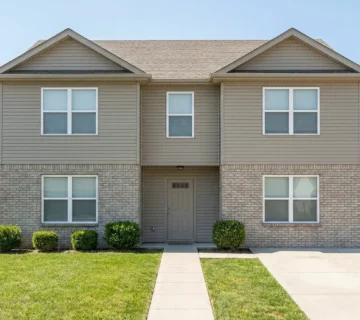
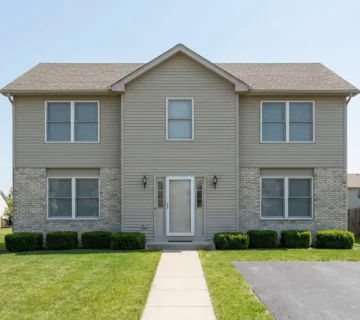
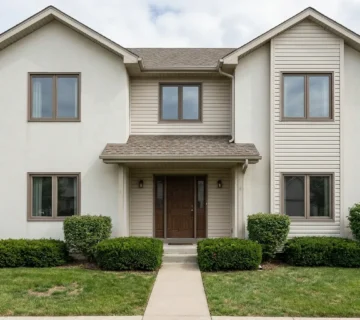
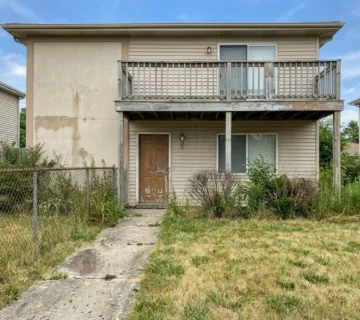
Here’s something I learned after fifteen years of exterior renovation consulting: most homeowners underestimate how much a facade change can shift a home’s entire personality — and they overestimate how much of that shift requires structural work. I took one ordinary beige house (the kind you’d pass without a second glance in any American suburb) and developed eleven different facade treatments for it. Some of these transformations cost under $15,000; others push past $90,000. Some I’d build tomorrow; others look gorgeous in a render but would age poorly in the real world. This isn’t a highlight reel of pretty pictures. It’s an honest walk-through of what each style actually costs, who it suits, and where it falls short. If you want a broader comparison gallery, I did a sister piece at 1 House, 11 Stunning Exterior Makeovers that looks at the inspiration side first. This review is the analytical counterpart. By the end, you’ll know which direction makes sense for your own home — not just aesthetically, but practically.
1. Traditional Elegance with Navy Accents
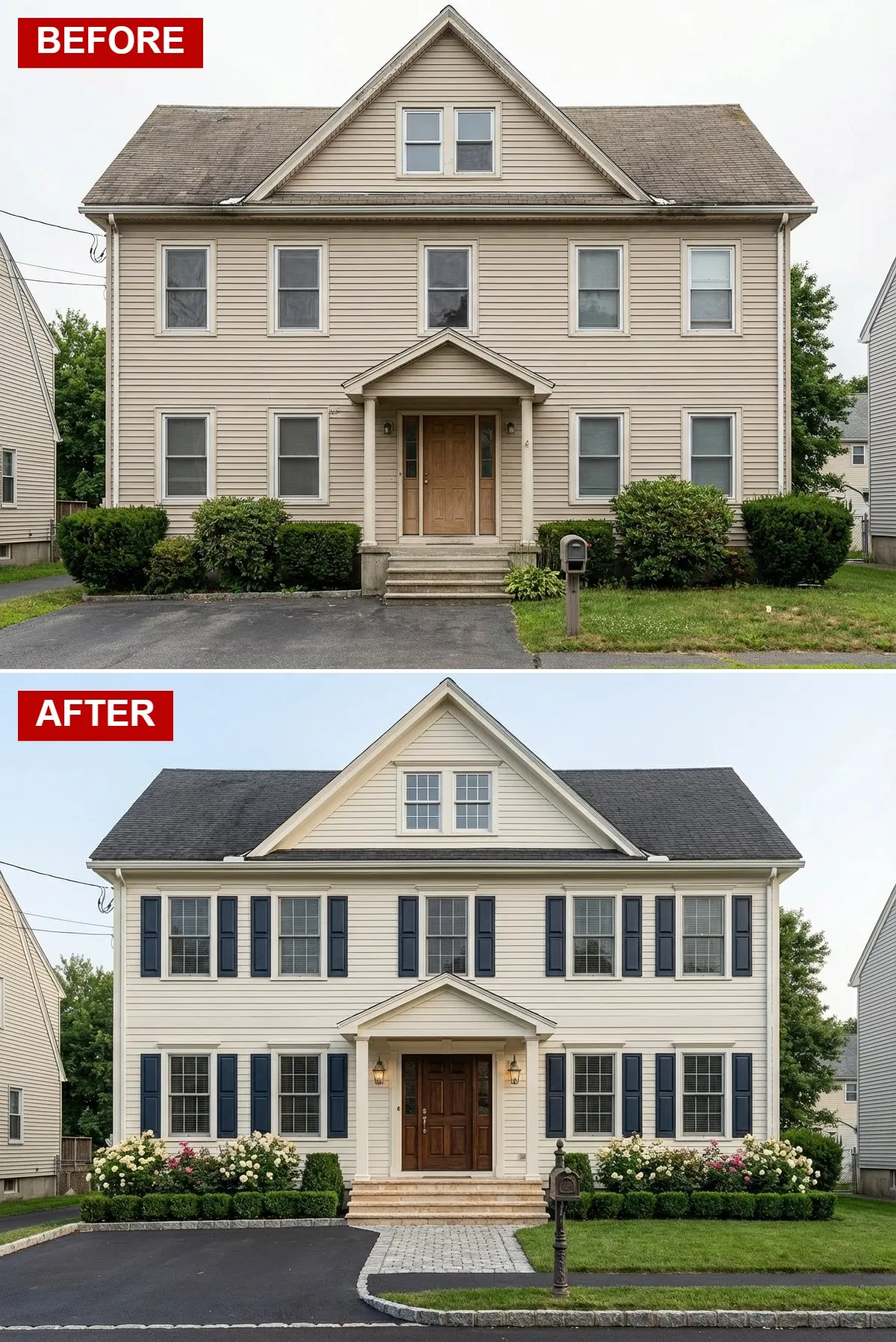
This is the safest of the eleven — and I mean that as a compliment. A creamy off-white siding (Benjamin Moore’s “White Dove” gets you close) paired with navy shutters hits a sweet spot that real-estate photographers have been leaning into for a decade because it photographs well in any season. What elevates this above the typical “resale neutral” look is the stone veneer cladding on the front steps. That single detail reads as $8,000 worth of custom masonry even when it’s actually a $1,200 thin-stone application over the existing concrete. The cobblestone walkway bordered with boxwoods and white roses is where most homeowners overspend — you don’t need actual cobblestone here. Manufactured brick pavers in a running-bond pattern achieve 90% of the visual impact for a third of the cost. Honest critique: the navy shutters need repainting roughly every 7-8 years because dark paint fades on sun-facing elevations, and the white siding will show every mud splash during wet seasons. Estimated total budget: $18,000-$28,000.
Color Palette
Warm enough to avoid the sterile-hospital look pure white creates.
Reads as sophisticated without crossing into depressing-dark territory.
Natural wood grain that won’t need repainting for 5-7 years.
Matches the siding’s warmth so the eye reads the walkway as part of the house.
How to Recreate This on Your Home
- Measure before you buy shutters. Fake shutters that are narrower than half the window width look wrong to the subconscious eye — budget for properly sized panels or skip them entirely.
- Skip real stone for the steps. Thin-stone veneer (brands like Eldorado Stone or Cultured Stone) bonds to existing concrete and cuts the cost by 60% with no visual penalty.
- Boxwoods need a plan. They look tidy in year one but get leggy by year four. Either commit to annual pruning in April or choose dwarf varieties like ‘Green Velvet’ that hold their shape.
- Pick a door color that repeats something nearby. The walnut door here works because it picks up the darker grout lines in the stone — not because dark doors are trendy.
- Best suited for: Buyers planning to sell within 5 years, neighborhoods with traditional architecture, or homeowners who want low-maintenance resale appeal.
2. Coastal Chic with Metal Roofing
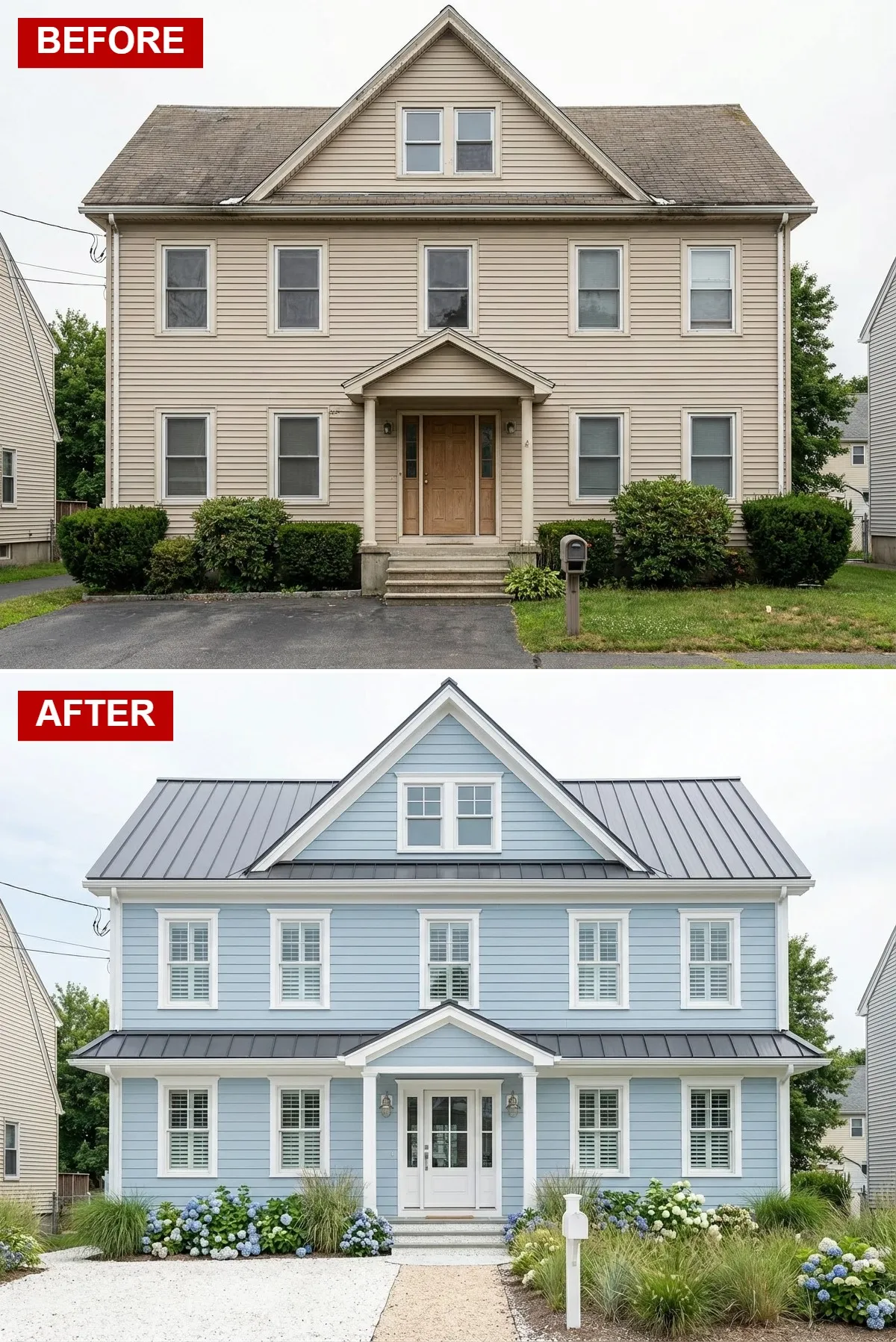
The powder-blue siding gets most of the attention here, but the standing-seam metal roof is doing the real work. A properly installed 24-gauge metal roof lasts 40-70 years versus 15-25 for asphalt, and in coastal environments it resists the salt-air corrosion that destroys standard shingles. That’s the practical case. The aesthetic case is that metal roofs cast a cleaner shadow line at the eaves and modernize a traditional roof profile without changing the pitch. The white gravel driveway is where I’d push back on the design — it looks incredible in the first photo, but it migrates into the lawn within two seasons, needs annual replenishment, and traps the radiant heat worse than asphalt. Permeable pavers in a light grey would give you the same coastal brightness with a fraction of the maintenance. Honest critique: this palette reads specifically as “beach house” — if your lot doesn’t have at least partial coastal context (water view, sandy soil, palm trees, or a neighborhood with nautical vernacular), the blue can feel costume-y. Estimated total budget: $32,000-$48,000 (metal roof alone is $18,000-$25,000 for a house this size).
Color Palette
A desaturated blue that reads as nautical without turning cartoonish.
Dark enough to anchor the light palette without competing with the siding.
Clean accents that emphasize the window grids and roof edge.
High visual impact but high maintenance — consider pavers instead.
How to Recreate This on Your Home
- Standing seam specifically, not corrugated. Corrugated metal reads as “barn” or “industrial” — standing seam is what gives you the refined coastal look.
- Hydrangeas need the right zone. They thrive in USDA zones 3-9 but struggle in hot, dry Southwestern climates. Substitute with oakleaf hydrangeas or abelia for similar shape in harsh sun.
- Contain gravel with proper edging. Steel or aluminum landscape edging buried 4-6 inches keeps white gravel from migrating into adjacent beds.
- Test paint chips in both morning and afternoon light. Powder blues shift dramatically between direct sun and shade — what looks serene at 2pm can look washed-out at 9am.
- Best suited for: Homes within 30 miles of a coast, Cape Cod or Low Country neighborhoods, or buyers who want a bright, casual feel that doesn’t read as stuffy.
3. Dramatic Modern Farmhouse
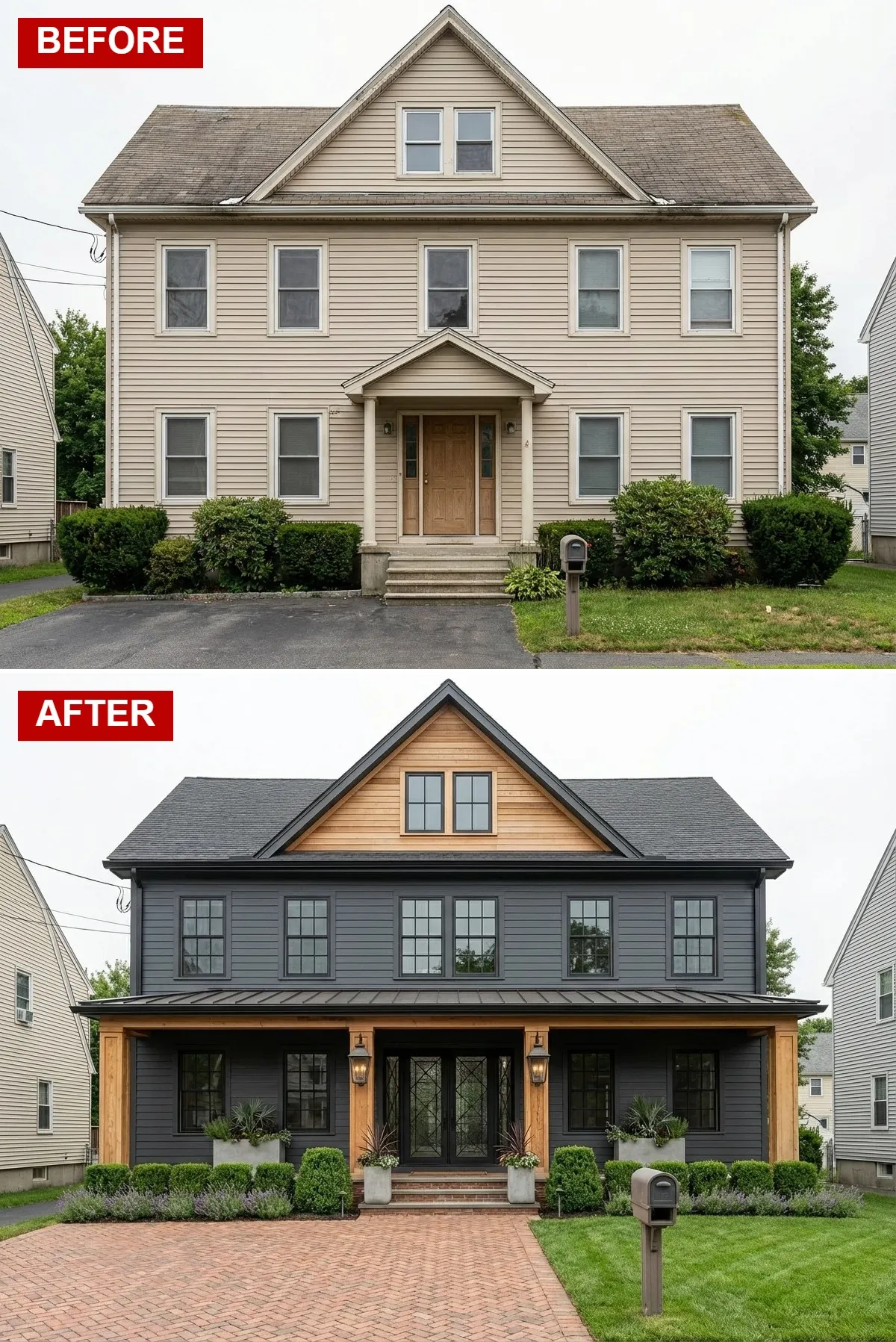
Modern farmhouse has been the dominant American facade style since roughly 2016, and I’ll admit I’m ready for the pendulum to swing back. That said, when it’s executed with restraint — like this version — it still hits hard. The charcoal siding with natural cedar gable accent is the classic move, but the detail that separates this from a thousand Pinterest copycats is the red brick driveway and porch. Brick warms up the dark siding in a way that concrete or gravel cannot, and it’s a material that will outlive every other element on the house. The chunky timber columns framing the porch are where budget discipline matters most: real rough-sawn 8×8 cedar posts run about $180-$240 per linear foot installed, while cedar-clad hollow columns with the same visual mass drop to $60-$90 per foot. Most people can’t tell the difference from the street. If you’re specifically starting from a dated brick box, I broke down the mechanics of this exact before-state in 15 Incredible Exterior Transformations: Dated Brick Boxes to Modern Masterpieces. Honest critique: dark charcoal absorbs heat — if you’re in a climate with summers above 95°F regularly, expect higher cooling bills and faster siding UV degradation. Also, the style is peaking; if you’re building for resale in 2028-2030, consider a warmer charcoal-taupe rather than full grey. Estimated total budget: $45,000-$68,000.
Color Palette
True charcoal rather than black — it reads softer in late-afternoon light.
The single element that keeps the house from feeling cold.
Matte rather than gloss — gloss shows every water spot.
Warm terracotta brick prevents the house from feeling monochromatic.
How to Recreate This on Your Home
- Choose charcoal, not pure black. True black siding looks sharp on day one but shows every pollen stain, dust mark, and sprinkler splash by month six.
- Cedar needs sealing. Untreated cedar silvers attractively in dry climates but turns grey-green-mossy in humid ones. A penetrating oil like Sikkens or TWP every 3-4 years keeps the warm tone.
- Black window frames should be specified at purchase, not painted. Factory-coated black fiberglass frames (Marvin or Pella) hold up; painting white vinyl frames black voids the warranty and the paint peels.
- Brick driveways need a proper base. Budget for 4-6 inches of compacted gravel below a 1-inch sand setting bed — cheap installations heave within two freeze-thaw cycles.
- Best suited for: New construction or full renovations, rural or wooded lots where the dark facade reads as intentional rather than gloomy, and homeowners willing to commit to the black-window maintenance tradeoffs.
4. Soft Sage Traditional
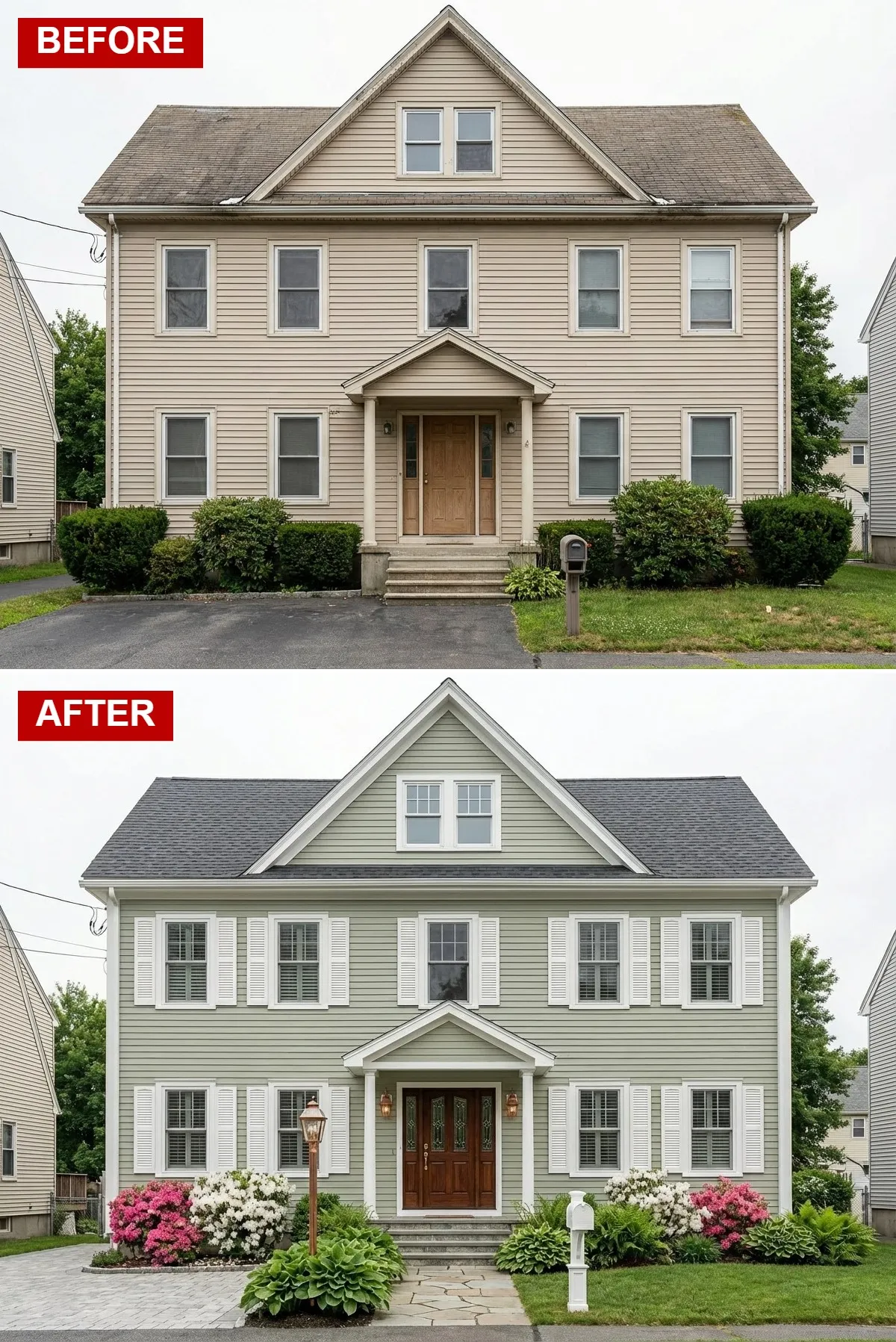
This might be my personal favorite of the eleven, and it’s also the most underrated facade direction in American residential design. Sage green reads as neutral in the way that beige claims to be but never actually is — it works in almost any regional context from the Pacific Northwest to rural Georgia. The white shutters are doing quiet work here; notice they’re only on the upper floors, which acknowledges that full window shutters on a three-story facade start looking busy. What I love most is the copper carriage lantern on the post. Copper is one of those materials that gets more beautiful as it ages; in five years the orange-brown patina will shift to verdigris green and it’ll look like the house has always been there. The flagstone walkway bordered with azaleas is classic Southern landscape vocabulary, but it translates northward perfectly well. Honest critique: sage green is easy to get wrong — too much yellow and it reads as mustard, too much grey and it looks like military paint. Request a quart of the actual paint and live with it on a 4’x4′ test patch for a week before committing to 45 gallons. Estimated total budget: $16,000-$24,000.
Color Palette
Leans slightly grey — warmer sages can turn mustard in direct sun.
A touch off pure white to avoid the glare against green siding.
Natural wood keeps the palette earthy rather than precious.
Irregular flagstone reads as more expensive than geometric pavers.
How to Recreate This on Your Home
- Sage green swatches to try: Sherwin-Williams “Evergreen Fog” (SW 9130), Benjamin Moore “Saybrook Sage” (HC-114), or Farrow & Ball “Pigeon” for a cooler read.
- Buy real copper, not copper-finish. A solid copper post lantern costs $280-$450 versus $60-$90 for copper-coated steel, but you’ll replace the steel version in 6-8 years when it rusts through.
- Flagstone needs polymeric sand in the joints. Regular paver sand washes out in the first heavy rain; polymeric sand hardens after wetting and locks the stones in place.
- Plant azaleas on the north or east side when possible. They scorch in full afternoon sun in zones 7 and warmer; morning light plus afternoon shade keeps them blooming longer.
- Best suited for: Homes on wooded lots, older neighborhoods with mature landscaping, or homeowners who want color without committing to something trendy.
5. High-Contrast Scandinavian Modern
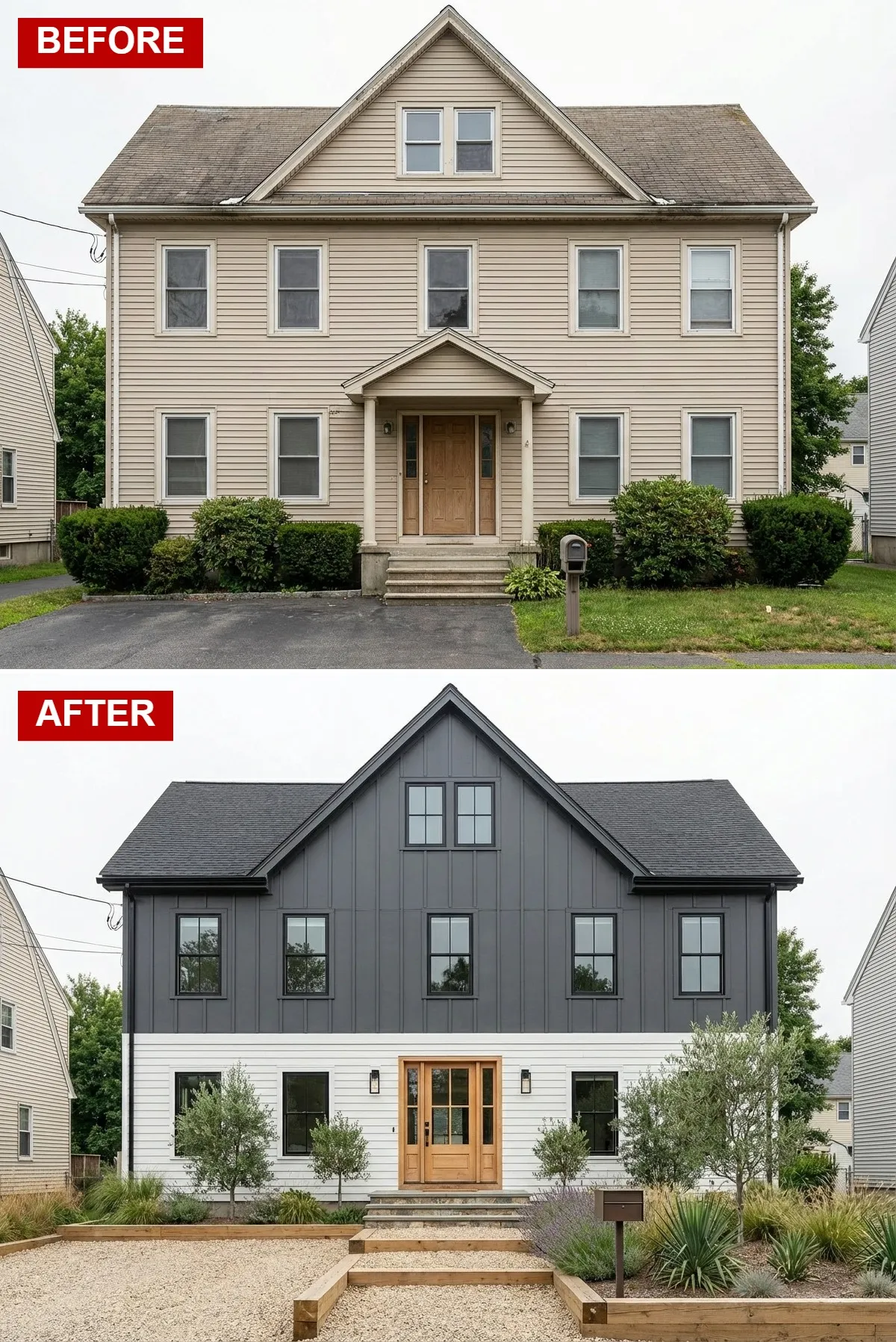
This is the most architecturally ambitious of the eleven. Two-tone siding with a clean horizontal division reads as intentional when it aligns with an actual floor transition inside — here, the white ground floor lines up with the first-floor ceiling, which is exactly how European architects handle this move. Vertical batten siding on the upper portion elongates the facade visually and adds shadow depth; the horizontal white below grounds the whole composition. The natural ash front door and timber retaining walls prevent the black-and-white palette from feeling like a graphic design project instead of a house. The drought-tolerant landscaping (olive trees, gravel, ornamental grasses) is well-matched to the architecture but also carries a practical climate argument — these plants need roughly 40% less water than a traditional lawn once established. Honest critique: this facade style photographs better than it lives in. Vertical batten siding traps leaves and debris in the channels, requires specific flashing details to prevent water intrusion, and the crisp black-white contrast shows every streak when it rains. It’s also an aesthetic that reads as “second home” or “architect’s statement” in most American neighborhoods — you may stand out in ways you don’t want to. Estimated total budget: $58,000-$82,000.
Color Palette
Vertical application emphasizes height on shorter facades.
Grounds the composition but will need power-washing twice yearly.
The warm humanizing element this palette needs.
Thermally broken frames are essential in cold climates.
How to Recreate This on Your Home
- Align the siding transition with a real floor line. If your first-floor ceiling is at 9 feet and your transition lands at 11 feet, the house will look awkward — the eye reads the inconsistency even if it can’t name it.
- Use pre-finished fiber cement for the batten siding (James Hardie’s Reveal Panel system or Nichiha) — on-site painting of batten siding fails at the joints within three years.
- Xeriscape needs a drip system for the first two years. “Drought-tolerant” doesn’t mean “install-and-forget” — olive trees and ornamental grasses need regular water until their root systems establish.
- Budget for window upgrades. The large frameless windows in this style only work if the existing rough openings can be modified — that’s framing work, structural headers, and new flashing details that can add $8,000-$15,000 beyond the window cost itself.
- Best suited for: Infill lots in architecturally diverse neighborhoods, Pacific Northwest or Upper Midwest climates, or buyers comfortable with a style that will read as “designer home” to their neighbors.
6. Earthy Craftsman Bungalow
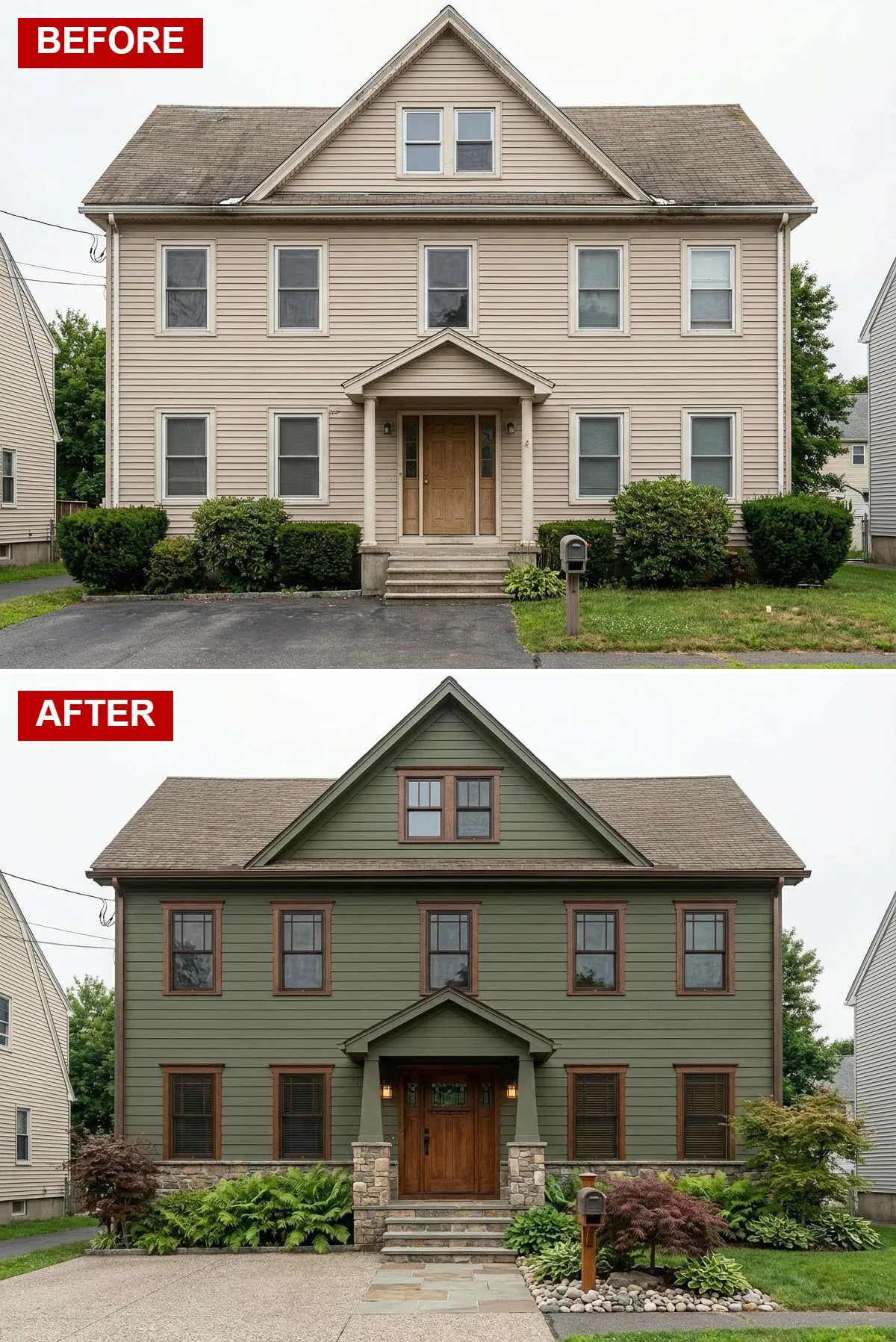
Craftsman is the most forgiving style in this entire lineup — it was designed from the start to feel hand-made and slightly irregular, which means small construction flaws read as character rather than mistakes. The olive-green siding pulls the facade into conversation with its surroundings; this palette was literally developed by early-20th-century architects to blend houses into wooded Pacific landscapes. The heavy dark trim around the windows and roofline is doing architectural work you can’t quite see without looking closely — it widens the visual proportions of each window by 25-30%, which makes the whole facade feel better-resolved. Stone veneer on the foundation and stone piers supporting the timber porch posts is the structural signature move of authentic Craftsman design. If you skip the stone piers and just paint the existing columns dark, you lose 70% of the style’s impact. I walked through the full mechanics of this exact conversion in A Facade Phoenix Rising: Transforming a Dated Colonial into a Characterful Craftsman Oasis — worth a read if you’re starting from a Colonial base. Honest critique: Craftsman works beautifully on bungalows and ranch houses but can feel costume-y on a three-story suburban home like this base structure. The style evolved for 1-1.5 story homes; taller proportions need careful handling of the second-floor massing or the bottom reads Craftsman while the top reads confused. Estimated total budget: $35,000-$52,000.
Color Palette
A historically accurate Craftsman color pulled from period paint fan decks.
The heavy trim is what signals “Craftsman” before you notice anything else.
Mixed stone sizes and earth tones look more authentic than uniform cut.
Exposed aggregate ties to the stone foundation palette.
How to Recreate This on Your Home
- Source period-appropriate paint. Sherwin-Williams and Benjamin Moore both publish historic Craftsman palettes — “Olive Grove” (SW 7734) or “Louisburg Green” (HC-113) are starting points.
- Commit to the trim width. Craftsman trim should be 4-6 inches wide around windows and 6-8 inches for corner boards — standard 2-3 inch trim defeats the style entirely.
- Tapered columns need the right base-to-top ratio. The column should be roughly 1.5x wider at the base than at the top, sitting on a stone pier at least 30 inches tall.
- Japanese maples need wind protection. They’re the perfect Craftsman-era plant but the lace-leaf varieties shred in exposed lots — plant them where they get morning sun and afternoon shelter.
- Best suited for: Bungalows, ranch homes, 1920s-1940s era houses, and wooded or semi-urban lots where the earthy palette reads as harmonious rather than drab.
7. Sleek Ultra-Modern Minimalist
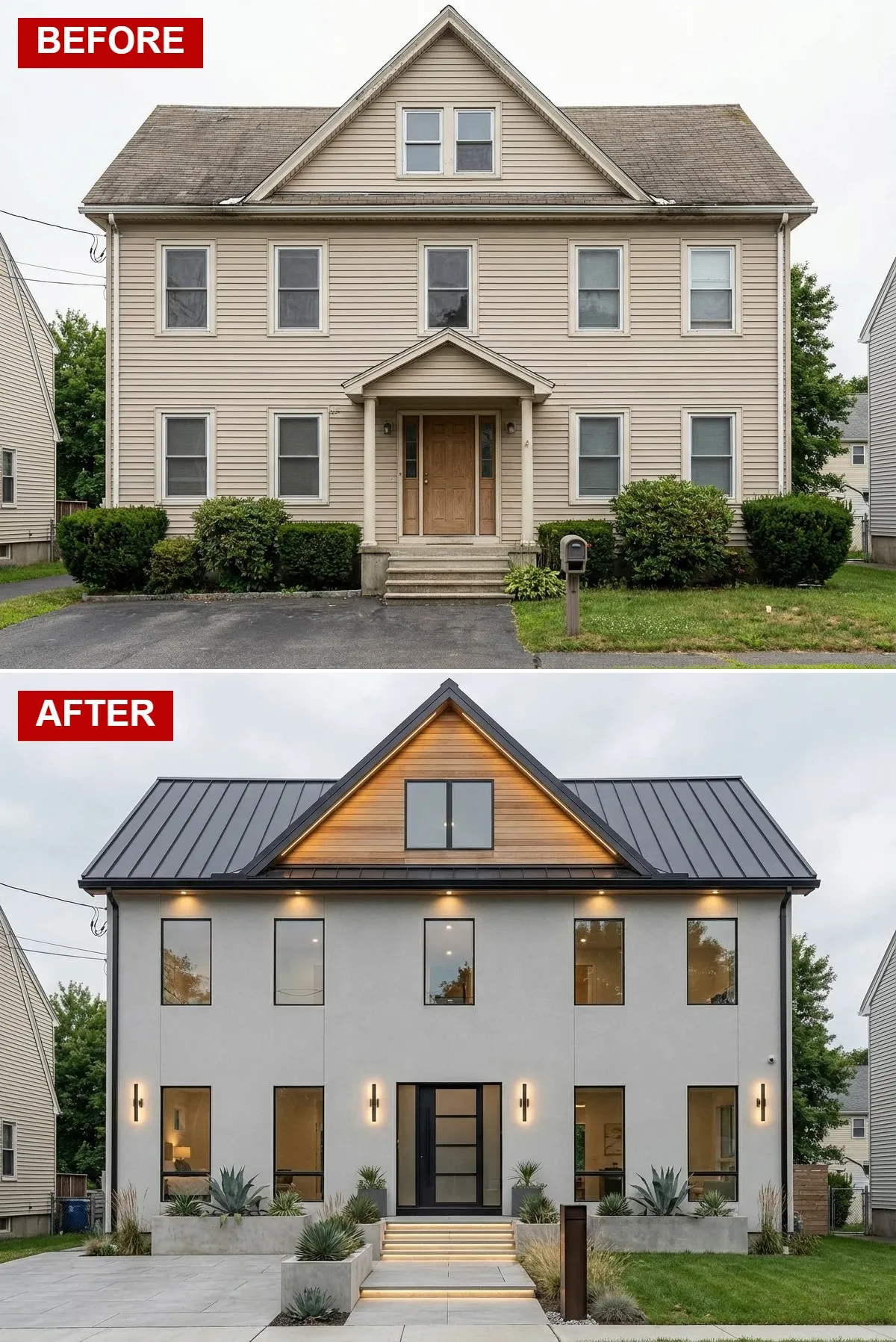
This is the transformation that looks most impressive in a render and requires the most careful execution in reality. Smooth stucco is an unforgiving material — every framing imperfection, every slight settling crack, every splice in the lath behind it will telegraph through the finish within two to three years if the substrate preparation is cut short. Budget for a three-coat stucco system (scratch, brown, finish) over proper self-furring metal lath with weep screeds at the base; anything less will delaminate. The warm teak gable cladding and hidden LED strip lighting are the details that elevate this beyond generic modern — the wood provides emotional warmth, and the integrated lighting creates a second personality for the house after dark. The pivot door is a $4,500-$12,000 upgrade that may or may not justify itself; functionally it performs worse than a standard door (harder to weather-seal, harder to lock with multiple points, swings wider into the entry). Honest critique: this style ages against trends rather than with them — modern minimalism from 2015 already looks dated to designers, and the 2025 version will look dated by 2035. It also requires obsessive maintenance to keep the “finished” look: one dirty downspout streak kills the whole effect. Estimated total budget: $75,000-$120,000.
Color Palette
Integral-color stucco (not painted stucco) holds color longer.
The single warm element that prevents the facade from feeling clinical.
Matte-black fixtures hide water spots better than gloss or oil-rubbed bronze.
Requires control joints at 8-10 foot intervals to prevent cracking.
How to Recreate This on Your Home
- Get a real stucco contractor, not a general contractor who subs it out. Three-coat stucco is a specialized trade; the quality difference between experienced plasterers and general framing crews with trowels is enormous.
- Use integrated LED strips rated for outdoor use (IP67 minimum). Cheap strip lights fail after one winter in cold climates, and replacing embedded lighting is a nightmare.
- Teak is the most expensive wood option but the only one that truly weathers well unsealed. Ipe is the practical alternative at 60-70% of the cost with nearly identical longevity.
- Large-format pavers need perfect subgrade prep. A 24×24-inch concrete paver that rocks slightly will drive you crazy every time you walk on it — budget for an experienced hardscaper.
- Best suited for: New construction, architecturally progressive neighborhoods, or homeowners with the discipline to maintain a high-finish exterior that shows every flaw.
8. Classic Colonial with a Pop of Red
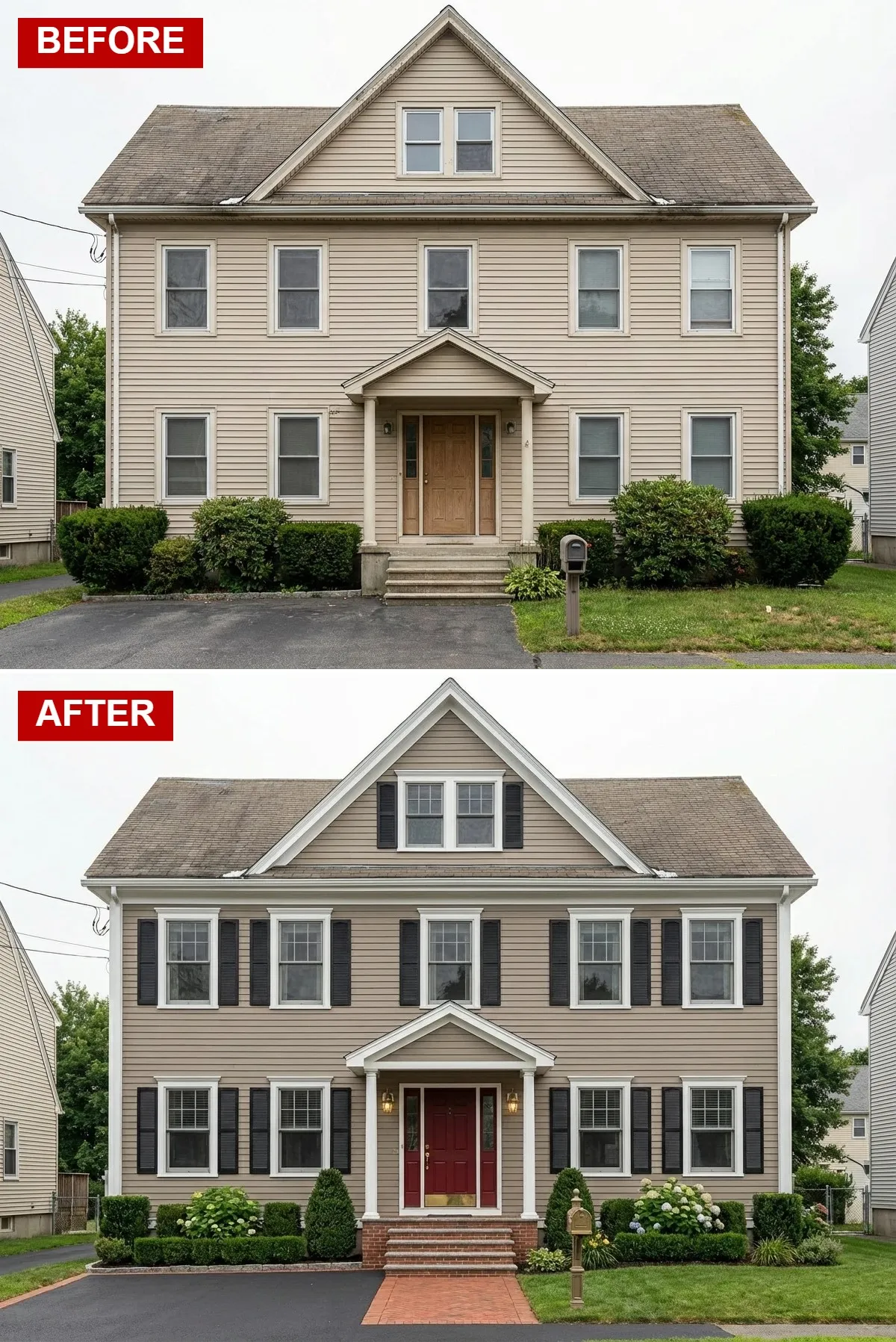
Colonial facades follow a strict visual grammar — symmetry, punched window openings, shutters that pretend they’d close if needed, a centered front door — and this transformation respects every rule. The taupe siding is smarter than true white because it photographs with more depth and hides weather staining between pressure washings. The black shutters against that warm neutral create the classic contrast that makes Colonial architecture read correctly. Everything about this treatment is safe, durable, and reliably appraisal-friendly. The red front door is the calculated risk — and I think it works, but barely. Heritage red is historically correct for Colonials and pairs well with brick, but the specific shade matters enormously: “firehouse red” turns the door into a kindergarten drawing, while “oxblood” or “burgundy” sits into the palette with grace. The red brick walkway is the kind of hardscape that ages into the house over 30-50 years, developing moss between the joints and wearing smooth at the high-traffic center. Honest critique: Colonial symmetry is unforgiving. If your existing house has an off-center door, asymmetrical window placement, or an addition that breaks the symmetry, this treatment will highlight those flaws rather than hide them. Estimated total budget: $22,000-$36,000.
Color Palette
A true neutral — reads greige rather than muddy.
True black is correct here — charcoal reads too contemporary for Colonial.
Deep enough to read as historically correct, not theatrical.
Used brick or tumbled pavers age more gracefully than new.
How to Recreate This on Your Home
- Measure your windows before ordering shutters. Each shutter panel should equal roughly half the window width — standard 15-inch panels on a 40-inch window look cartoonish.
- Specifically request a semi-gloss finish for the front door. Flat red shows every fingerprint and weathers unevenly; semi-gloss is easier to wipe down and holds color longer.
- Brass kickplates and knockers patina within a year. If you want the maintained-brass look, choose lacquered brass. For the aged look, choose unlacquered and let it age.
- Sculpted hedges require three years to establish. If you’re shopping for an instant look, buy boxwoods pre-trained into shape rather than trying to train young shrubs yourself.
- Best suited for: Houses built before 1970 with genuine Colonial proportions, mid-Atlantic or New England regions, or sellers targeting buyers who value historical accuracy.
9. Rustic Timber Frame Retreat
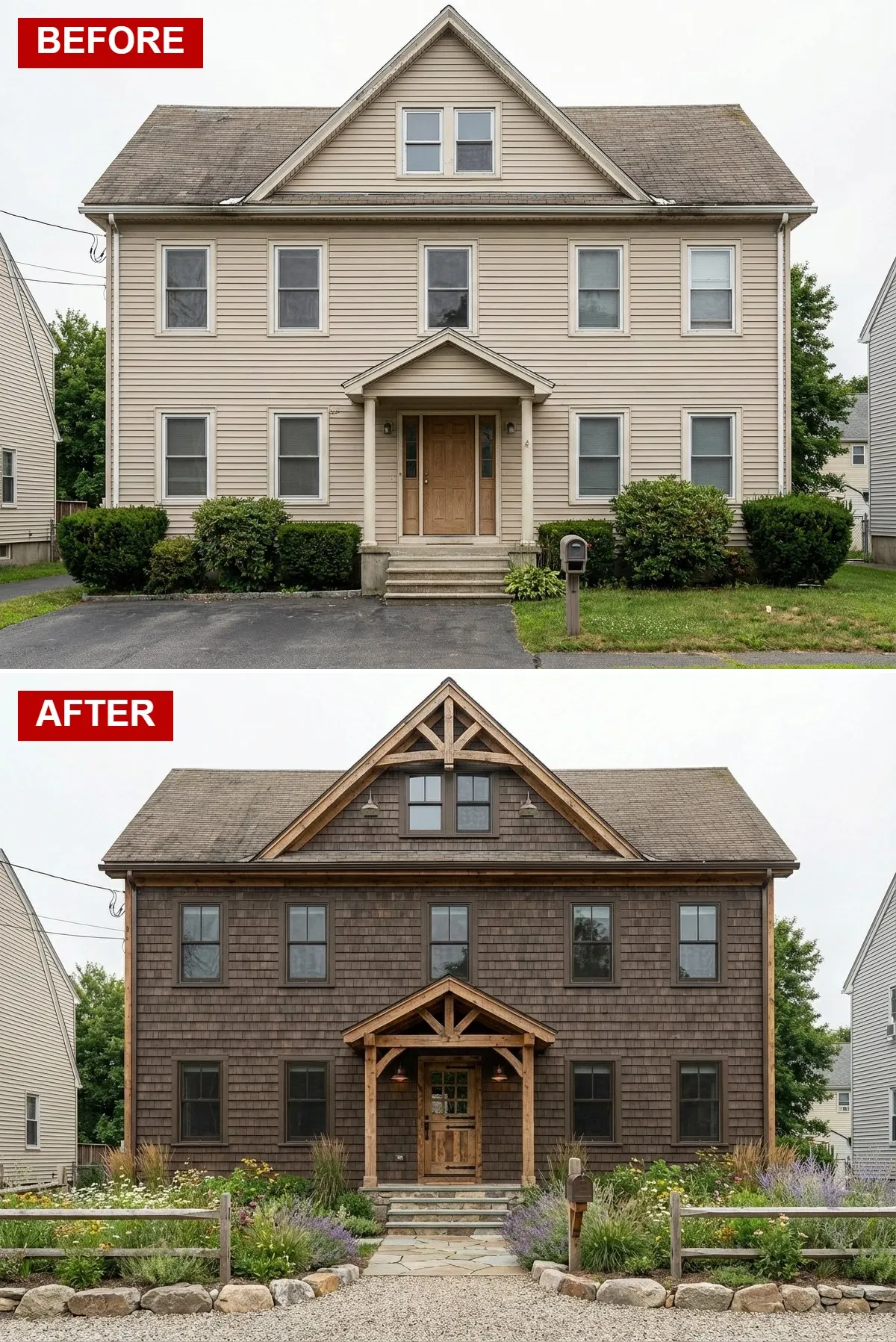
This is the most contextually specific transformation of the eleven. A timber-frame lodge treatment works beautifully on a mountain lot, a rural acreage, or a property genuinely backed by woods — and it looks costume-y on a quarter-acre suburban lot. Be honest with yourself about which you have. The cedar shake siding is the defining material here; genuine hand-split cedar shakes cost $12-$18 per square foot installed versus $4-$7 for vinyl shake imitations, and the difference is visible from 30 feet away. The heavy timber framing at the gable peak and porch portico is structural storytelling — it tells visitors the house was built to last through snow loads and storms, even when the timbers are decorative. The split-rail fence and wildflower meadow landscaping are doing something that manicured suburban landscaping can’t: they’re telling the visitor to relax. Honest critique: cedar shakes require real maintenance (annual moss/mildew cleaning, oiling every 4-5 years, replacement of split shakes). Wildflower meadows look chaotic in July and look dead in October. This is a style for people who embrace seasonal change and don’t want a facade that looks identical every day of the year. Estimated total budget: $55,000-$85,000.
Color Palette
Pre-stained shakes hold color longer than site-finished ones.
The texture of rough-sawn wood adds more value than the species.
A Dutch door here is a genuine functional feature, not just decoration.
Irregular fieldstone reads more authentic than uniform cut stone.
How to Recreate This on Your Home
- Use fire-resistant cedar shakes if you’re in wildfire country. Western red cedar shakes can be pressure-treated with fire retardant to Class B rating — essential in California, Colorado, or Pacific Northwest fire zones.
- Timber trusses can be structural or decorative. Decorative timber trusses (hollow or glued-up) cost 40-60% less than structural ones and look identical from the ground.
- Split-rail fencing needs a proper footing. Posts set in concrete rot at the soil line within 8 years; posts on buried gravel drainage bases last 20+.
- Wildflower meadows are a three-year commitment. Year one looks sparse, year two looks promising, year three finally delivers what the seed packet promised.
- Best suited for: Rural or wooded lots of at least a half acre, mountain regions, or homeowners moving from urban/suburban environments who want a slower aesthetic.
10. Urban Industrial Loft
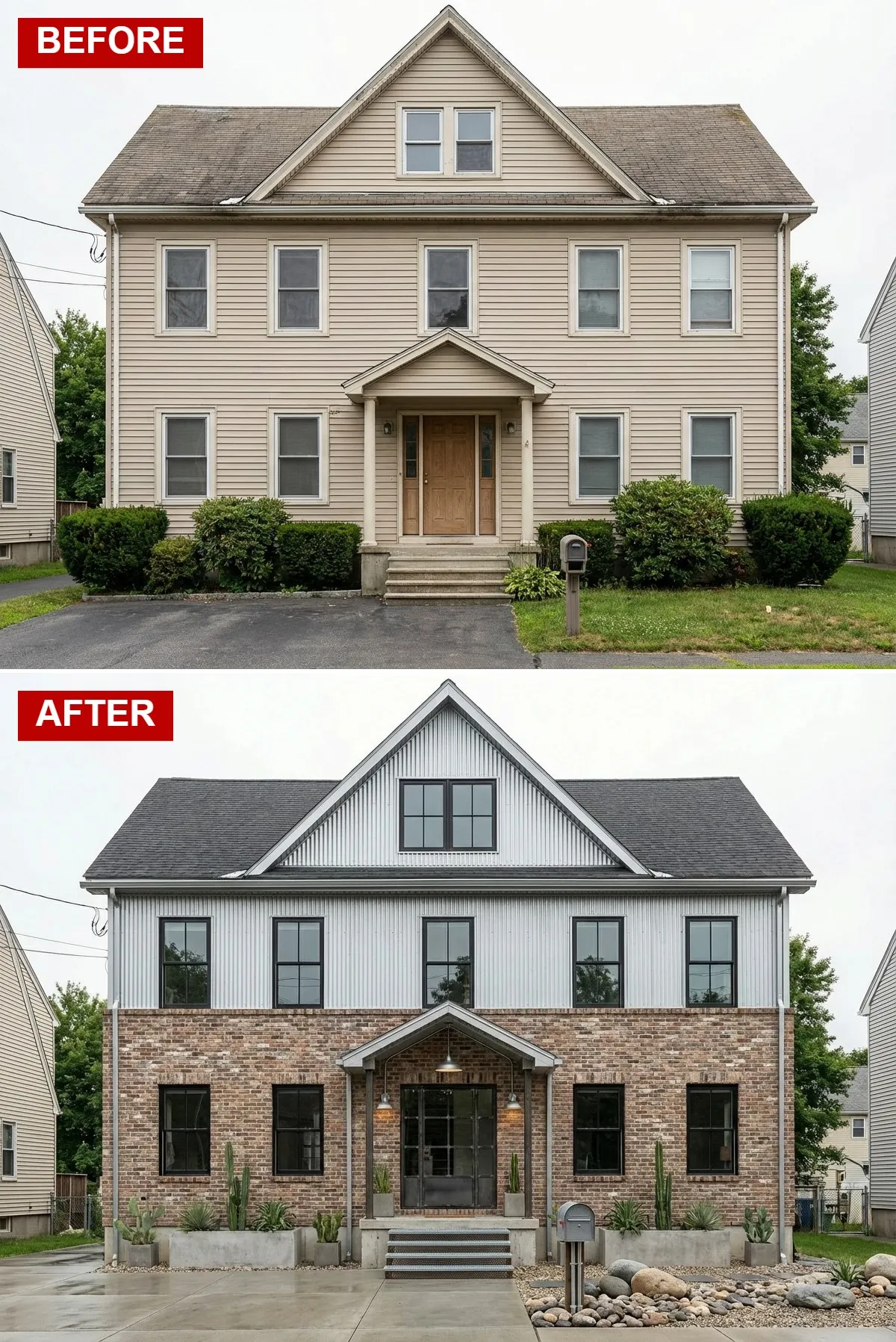
This is the most polarizing treatment in the lineup. Industrial residential design borrows vocabulary from converted warehouses and former factories, and that vocabulary only lands correctly when the context supports it — an urban infill lot, a former industrial neighborhood, or a converted commercial building. On a suburban cul-de-sac, it reads as “the weird house.” The aged brick ground floor paired with galvanized corrugated metal siding above is the classic industrial gesture, and when it’s done with real materials (reclaimed brick from an actual demolition, 26-gauge Galvalume metal), it ages beautifully. The steel-framed glass front door is the single most expensive single-item choice in this whole eleven-transformation lineup — real hot-rolled steel residential doors run $8,000-$18,000 installed. The metal grating steps are an authentic industrial material but a practical disaster: they hold snow and ice, they’re brutal on bare feet, and they drop mail, keys, and phones through the grating on a regular basis. Honest critique: this style requires context to work. Without an urban or post-industrial setting, you’re paying premium industrial-material prices to create a home that reads as “trying too hard.” Estimated total budget: $65,000-$95,000.
Color Palette
Galvalume ages with a soft matte patina; galvanized steel stays shinier longer.
Reclaimed brick adds authentic character new brick cannot replicate.
Hot-rolled steel with a matte clear coat rather than painted.
Steel-troweled finish reads more refined than broom finish for this style.
How to Recreate This on Your Home
- Sourced reclaimed brick costs roughly 2x new brick but looks 10x better. Check architectural salvage yards for brick from demolished factories or warehouses.
- Corrugated metal siding needs a proper rain screen. Direct-applied metal siding traps condensation and accelerates substrate rot — furring strips and a vented air gap are non-negotiable.
- Consider alternatives to metal grating steps. Perforated steel decking or concrete tread inserts give the industrial look without the practical drawbacks.
- Steel-framed glass doors need heated entries in cold climates. They transmit cold and generate condensation — pair with radiant floor heat in the entry or plan for morning ice puddles.
- Best suited for: Urban neighborhoods, converted or renovated loft-style homes, rust-belt cities with industrial heritage, or architecturally adventurous owners committed to the style’s specific requirements.
11. Charming Storybook Cottage
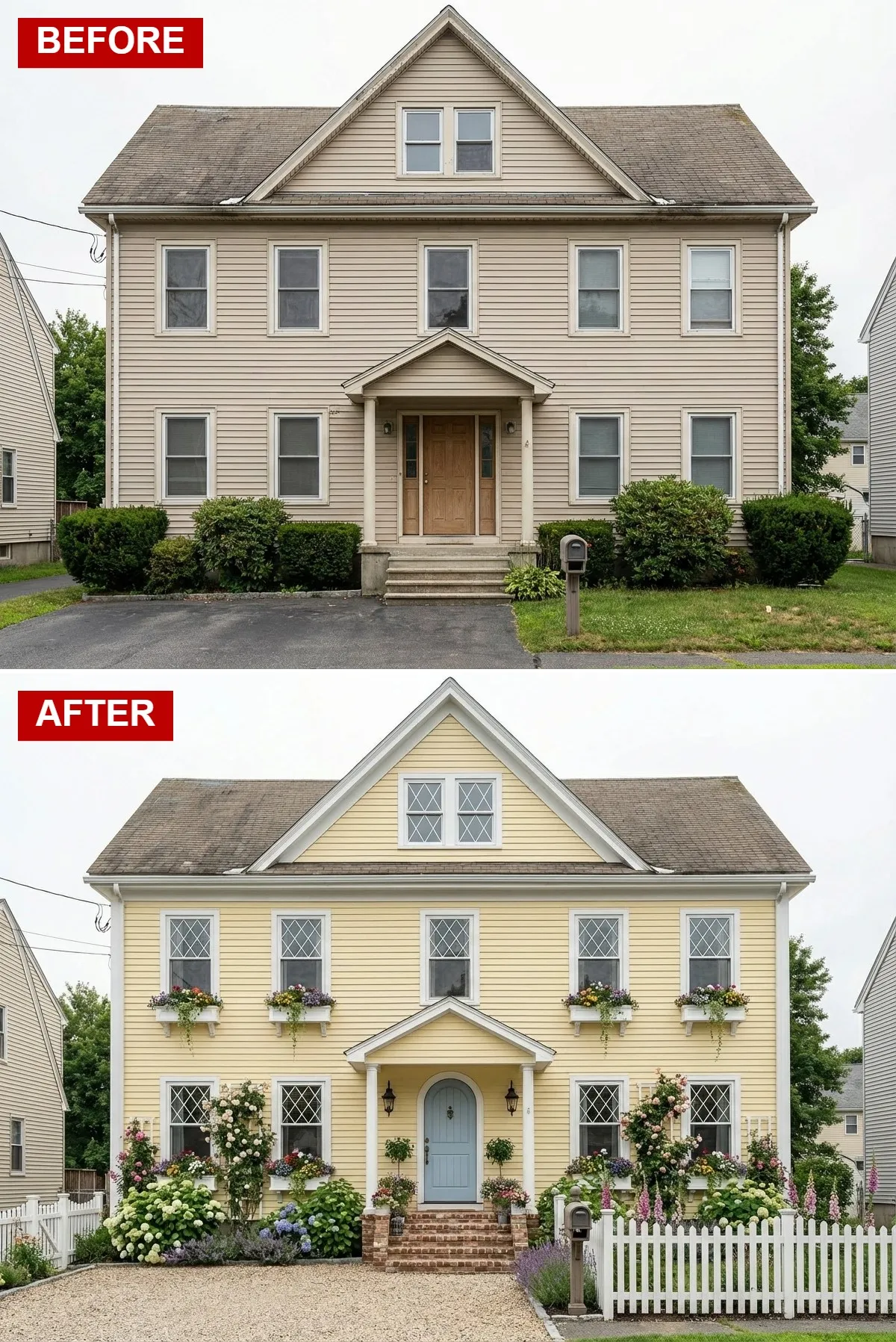
Storybook cottage is the friendliest facade in the lineup, and it’s also the hardest to pull off without slipping into twee. The pale yellow siding is surprisingly forgiving — it photographs warmer than it reads in person, which is the opposite of most pastels. The diamond-grid window panes are where authenticity matters: real divided-light windows with actual muntins running through the glass cost substantially more than snap-in grilles, but snap-in grilles look plastic from five feet away and kill the cottage illusion. The arched light-blue front door is the centerpiece and deserves the investment — a custom arched door runs $2,800-$5,500 depending on wood species and hardware. The window boxes overflowing with flowers and the climbing roses on the facade need ongoing attention; these aren’t install-and-forget features but seasonal commitments. Honest critique: storybook cottage is a polarizing style and specifically a style that many male co-owners find uncomfortable — have the conversation before committing. It also ages the best on small cottage-proportioned homes (1-1.5 stories, under 1,800 sq ft); on larger houses like this base structure, the style can read as overdone. Estimated total budget: $28,000-$42,000.
Color Palette
Warm yellow with enough grey to avoid the Easter-egg problem.
Clean white is essential for the storybook contrast.
A soft sky blue rather than a saturated turquoise keeps the palette gentle.
Warm brick grounds the pastel palette in something substantial.
How to Recreate This on Your Home
- Invest in real divided-light windows. True-divided-lite (TDL) or simulated-divided-lite (SDL) with muntins between glass panes hold the cottage illusion — snap-in grilles do not.
- Window boxes need a self-watering reservoir in full-sun locations. Cedar or fiberglass boxes with internal reservoirs cut watering from daily to twice-weekly in summer.
- Climbing roses need support from year one. Install trellis or wire guides before planting — retrofitting support to a 4-year-old rose damages the canes and delays blooming.
- White picket fences need annual maintenance. Budget for yearly power washing and paint touch-ups, or consider vinyl if you want the look with less upkeep.
- Best suited for: Small-to-medium cottage-proportioned homes, historic neighborhoods with existing cottage vernacular, gardening enthusiasts willing to maintain the floral elements, or homeowners who prioritize character over trendiness.
Universal Pro Tips from Fifteen Years of Exterior Work
- Start with the roof, not the siding. A new roof sets the tone for every other decision — if you’re replacing the roof within five years, hold off on the exterior color until afterward so you can coordinate.
- Paint the front door last. You’ll read the whole facade differently once the landscaping is in, and a door color that looked right on the mood board often reads wrong against the finished context.
- Landscape lighting matters more than people realize. A $1,200 investment in low-voltage path and uplighting often has more impact on curb appeal than a $4,000 paint job — the house is dark twelve hours a day.
- Mix at least three materials, but no more than four. A single-material facade reads as cheap regardless of quality; five or more materials reads as chaotic. The sweet spot is three: siding, accent wood or stone, and hardscaping.
- Photograph your facade from the street before, during, and after. Your eye gets used to the existing house and stops seeing it — the photographs will show you what’s actually changing.
- Budget 15-20% more than the contractor’s estimate. Exterior work uncovers rot, framing issues, and flashing problems that can’t be seen until demolition begins — every exterior project I’ve run has exceeded the initial scope.
Final Verdict: Which Transformation Would I Actually Build?
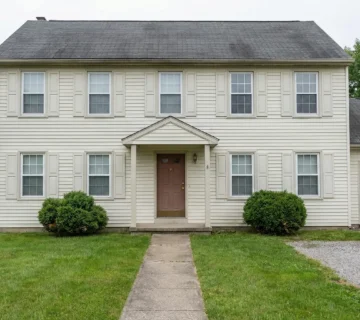
If I were buying this house tomorrow with a $30,000 budget, I’d choose the Sage Traditional (#4) — it’s the most universally flattering, lowest-maintenance, and most timeless option in the lineup, and it’s achievable without structural work. With $50,000, I’d shift to the Modern Farmhouse (#3), but I’d commission a charcoal-taupe rather than pure charcoal so it ages better past the style’s trend peak. With $80,000+, I’d build the Craftsman Bungalow (#6) — the stone foundation work and timber piers create a permanence that the other premium options don’t match. The transformations I’d personally avoid: the ultra-modern minimalist (#7) because of the ongoing maintenance burden, and the urban industrial (#10) unless the neighborhood context genuinely supports it. If your starting point is a 1990s beige builder-grade box, the mid-century pivot in Goodbye 90s Beige Box, Hello Mid-Century Modern Curb Appeal is the closest companion to what I’d recommend. Every one of these eleven can be beautiful; not every one makes sense for every house. The honest question isn’t “which looks best?” — it’s “which will I still love in ten years, on the fourth Sunday of February, when I’m pulling into my driveway after a long week?” That’s the only curb appeal test that matters.
Frequently Asked Questions
What is the cheapest exterior makeover that still makes a significant impact?
A quality paint job on the siding combined with a new front door and updated light fixtures typically delivers the highest visual return for the lowest cost — expect $6,000-$12,000 total for a professionally painted 2,000 sq ft facade, a mid-range front door ($1,500-$3,000), and two or three coordinated light fixtures ($400-$900). The Sage Traditional (#4) and Colonial with Red Door (#8) transformations above are both achievable at the lower end of this range.
How long does a full exterior transformation actually take?
Paint-only transformations usually take 1-2 weeks. Adding new siding extends the timeline to 4-6 weeks. A complete overhaul with new roofing, siding, windows, hardscaping, and landscaping typically runs 10-16 weeks start to finish, with weather delays and permit inspections frequently extending that by another 2-4 weeks. In the Northern US and Canada, plan around the construction season (April through October) rather than attempting winter work.
Will an exterior makeover actually increase my home’s resale value?
Generally yes, but the ROI varies significantly by project type. According to industry remodeling reports, a new garage door returns roughly 95% of its cost at resale, a new entry door returns around 75%, and quality siding replacement returns 65-80%. Paint-only projects often return over 100% because the investment is small relative to the perceived improvement. Extreme style choices (ultra-modern or heavy industrial) typically return less than neutral, broadly appealing styles like modern farmhouse or traditional.
Do I need a permit for exterior renovations?
Paint, landscaping, and replacing existing features (door-for-door, window-for-window) usually don’t require permits. Any structural work — adding a porch, changing window or door openings, altering the roofline, installing new electrical for exterior lighting — virtually always does. Many HOAs also require architectural review committee approval for color changes and material changes even when municipal permits aren’t needed. Check with your city’s building department and HOA before committing to a design direction.
Which exterior style has the best long-term durability?
Fiber-cement siding (James Hardie, Nichiha, Allura) has the longest manufacturer warranty (30-50 years) and the best resistance to rot, pests, and fire. Brick and stone veneer are even more durable but cost substantially more. Avoid vinyl siding if longevity matters — it fades, warps in heat, and cracks in extreme cold. Among roofing materials, standing-seam metal and architectural asphalt shingles both last 40-50+ years with proper installation; cedar shakes look beautiful but require the most maintenance.
Can I mix multiple styles from this article for my home?
Yes, but with restraint. The most successful real-world facades borrow one element from a second style rather than fully combining two styles. For example, a traditional Colonial facade with a modern matte-black front door and modern sconces reads as an updated classic. Combining Craftsman stone piers with farmhouse-style board-and-batten siding can work. What doesn’t work is attempting a full 50/50 style merger — the result tends to read as indecisive rather than intentional.
Sources & Further Reading
- Remodeling Magazine, Cost vs. Value Report — annual national and regional ROI data for garage doors, entry doors, siding replacement, and roof replacement referenced in the resale-value guidance.
- USDA Plant Hardiness Zone Map (2023 revision) — zone references for hydrangeas (zones 3-9), azaleas (zone 7 shade guidance), and wildflower meadow establishment windows.
- James Hardie, HZ5 & HZ10 Product Climate Zones and 30-Year Warranty Documentation — basis for the fiber-cement durability claims in the FAQ.
- Western Red Cedar Lumber Association, Shake & Shingle Grading and Installation Manual — reference for the fire-retardant pressure treatment and Class B rating notes in Section 9.
- National Fire Protection Association (NFPA), Firewise USA — Home Ignition Zone Guidance — informs the wildfire-country material recommendations.
- Metal Roofing Alliance, Standing Seam vs. Architectural Shingle Lifespan Comparison — basis for the 40-70 year metal roof figures in Section 2.
- Benjamin Moore Historic Color Collection and Sherwin-Williams Historic Palette — source for the specific Craftsman, Colonial, and traditional paint codes cited throughout.
- Author’s own project files — cost ranges reflect my own residential consulting work across Texas, Arizona, and the Southeast between 2013 and 2026, adjusted to early-2026 pricing.

No comment