
The Unspoken Autobiography: Decoding Your Home's Hidden Narratives
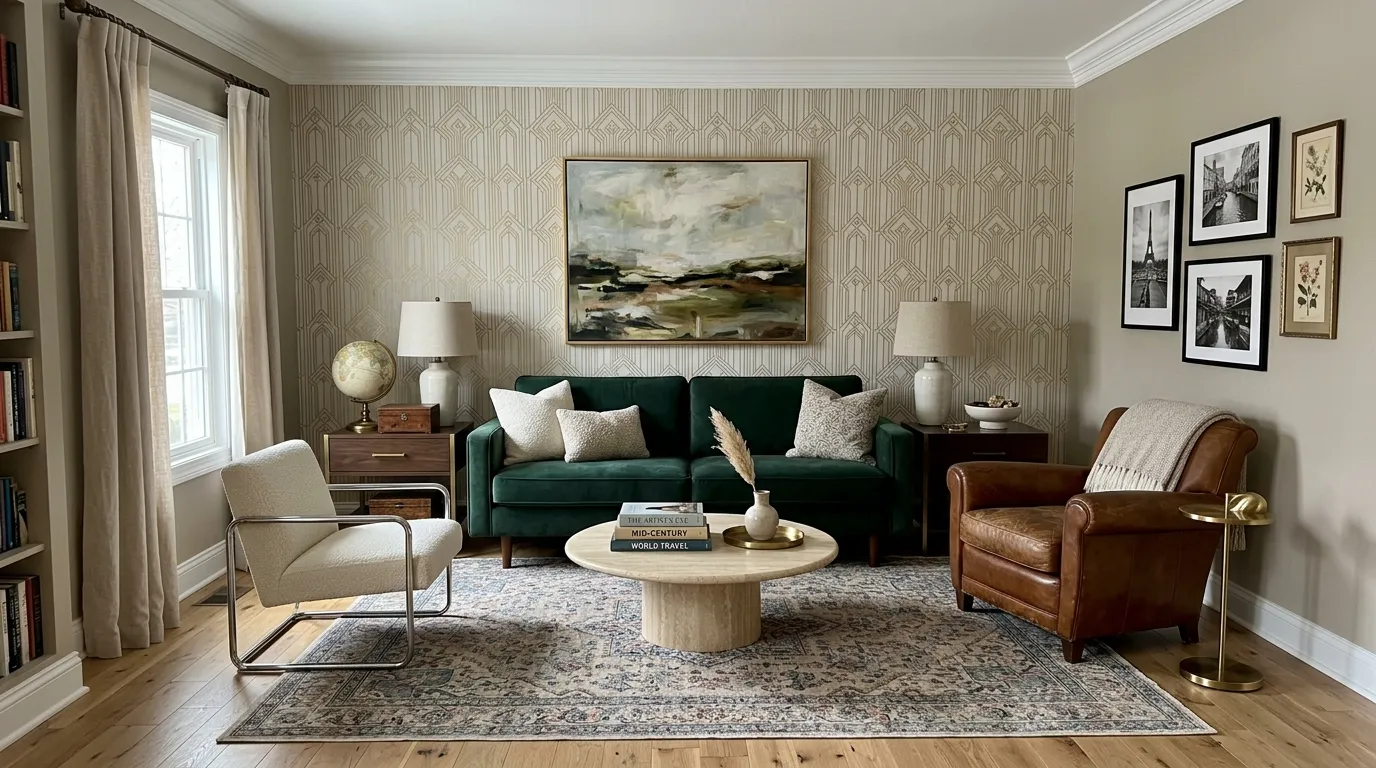
Our homes are far more than mere shelters or repositories for our possessions; they are complex, externalized manifestations of our inner worlds. Every object chosen, every color applied to a wall, and the very arrangement of furniture serves as a sentence in the ongoing autobiography of our lives. This unspoken narrative tells the story of where we have been, what we currently value, and the person we aspire to become. Walking through someone's living space, like the beautifully curated yet lived-in room pictured above, is akin to reading their psychological blueprint. We often curate these spaces unconsciously, driven by an intuitive need for comfort, stimulation, or nostalgia. By learning to consciously decode these hidden narratives, we gain profound insights into our own behaviors, emotional needs, and personal evolution. This deep-dive exploration aims to move beyond surface-level aesthetics to understand the profound connection between our environments and our identities.
The Archaeology of the Self: Objects as Evidence
Think of your home as an active archaeological site. Every item you possess, whether displayed prominently on a coffee table or tucked away in a drawer, is an artifact reflecting a specific moment in your personal history or a facet of your personality. The items we choose to surround ourselves with act as anchors to our identity. A collection of vintage cameras might signify a deep appreciation for history and the captured moment, while a shelf overflowing with cookbooks may indicate a nurturing personality who expresses love through nourishment. In the featured image, the prominent globe and books titled "World Travel" are not random decorative choices; they strongly suggest a homeowner who values exploration, possesses a global mindset, or perhaps harbors a deep-seated 'wanderlust' that defines a significant part of their self-image. Analyzing these objects requires looking past their utility or aesthetic value to question *why* they are there. What memory does that ceramic bowl hold? Does that piece of art challenge you or soothe you? These answers are the raw data of your domestic autobiography.
The Psychology of Color and Texture Choices
While design trends often dictate popular colors, our individual selections are deeply rooted in emotional needs and psychological states. Color psychology in the home goes beyond simple associations like "blue is calming." It's about energy regulation. Someone drawn to deep, encompassing shades like the forest green velvet sofa in the example image might be seeking a sense of groundedness, security, and a connection to the natural world within their sanctuary. Conversely, an abundance of stark white might indicate a desire for clarity, cleanliness, or a fresh start, sometimes bordering on a need for rigid control. Texture plays an equally significant, though often overlooked, psychological role. The mix of materials shown above—tactile boucle, smooth leather, plush velvet, and cool marble—suggests a sophisticated need for varied sensory input. A preference for soft, enveloping fabrics often correlates with a high need for comfort and emotional soothing, while a reliance on sleek metals and glass might reflect a personality that values efficiency, modernity, and emotional distance.
The Spatial Blueprint: How Layout Dictates Life
The architectural layout of a home and how we arrange furniture within it is the stage direction for our daily lives. It dictates movement, interaction, and solitude. An open-plan living area that seamlessly merges the kitchen and lounge suggests a household that values communal activity, constant connection, and perhaps a blurring of lines between work, rest, and socializing. It fosters togetherness but may sacrifice individual privacy. In contrast, a home with highly segmented, distinct rooms points toward a desire for compartmentalization, defined roles, and dedicated spaces for specific activities—a library for quiet contemplation, a formal dining room for structured gathering. The orientation of furniture is also telling. A living room where all seating faces a television indicates that media consumption is the primary communal ritual. However, a layout like the one pictured, where chairs are angled toward the sofa over a central coffee table, prioritizes conversation, eye contact, and interpersonal engagement. The layout essentially forces specific social behaviors.
The Public Facade vs. The Private Sanctum
Most homes operate on a spectrum of performance versus authenticity, often divided by public and private zones. The living room, entryway, and guest bath usually represent the "curated self"—the version of our lives we are willing to present to outsiders. These spaces are often tidier, more stylized, and contain our most impressive objects (like the large-scale art and curated bookshelves in the featured image). They are the "best foot forward." The narrative becomes more raw and honest as you move into private spaces like the master bedroom, the home office, or the proverbial "junk drawer." The discrepancy between these zones is highly revealing. A pristine living room paired with a chaotic, cluttered bedroom might suggest a person who is highly capable of maintaining professional appearances but struggles with internal organization or self-care behind closed doors. Examining the gap between how we style public spaces versus how we actually live in private ones is crucial for understanding the full story of the homeowner.
Aspirational Decor: The Person We Want to Be
A fascinating layer of the home narrative is composed of objects that represent not who we are, but who we aspire to become. This is "aspirational decor." It is the expensive exercise equipment that sits unused in the corner, signaling a desire for fitness that hasn't yet translated into habit. It is the stack of dense, intellectual literature on the nightstand that remains unread, representing a desired intellectual identity. It is the highly organized chef's kitchen in a home where dinner is usually ordered in. These items are placeholders for future selves. They are important psychological tools, acting as physical manifestations of our goals. However, if the gap between the aspiration and the reality becomes too wide, these objects can transform from motivators into sources of subconscious guilt or anxiety. Recognizing which parts of your home are aspirational helps you evaluate if your environment is supporting your actual life or merely staging a fantasy.
Nostalgia and the Anchor of Memory
Our homes act as external memory banks. As we move through life, experiencing changes in relationships, careers, and personal growth, our physical possessions often serve as the stabilizing anchors to our past selves. Incorporating inherited furniture, framing old family photographs, or displaying souvenirs from past travels are ways of validating our personal history. In the provided image, the gallery wall with what appear to be travel photos or vintage prints serves this exact function—they are visual touchstones of experiences that helped form the resident's identity. The psychological danger lies in allowing the past to overwhelm the present. A home that is too heavily reliant on nostalgia, where every surface is covered in memorabilia and nothing new is permitted, can indicate a resistance to change or a difficulty in moving forward. The healthiest homes strike a balance, honoring the past without letting it dictate the future aesthetic or functional needs of the present.
The Evolution of the Narrative: When Homes Stagnate
Just as people evolve, so too must the narrative of their homes. A vibrant, healthy home autobiography is a living document that changes over time. A space that remains static for decades, refusing to adapt to new life stages (such as children leaving the nest, retirement, or a shift in personal values), suggests psychological stagnation. It indicates a homeowner clinging to a previous version of themselves. We often see this in the reluctance to repaint a child's room long after they have moved out, or holding onto furniture that is uncomfortable or dysfunctional simply because it has "always been there." Recognizing when the story your home tells is no longer accurate is the first step toward refreshing your environment to support who you are today. A refreshed space often leads to a refreshed perspective on life itself, proving that the connection between internal self and external environment is a continuous, reciprocal loop.
Conclusion
Decoding the unspoken autobiography of your home is not an exercise in judgment or achieving aesthetic perfection. Rather, it is a powerful tool for self-awareness. By learning to read the language of your own environment—understanding why you chose that specific sofa, why you organize your books in a certain way, or why you are drawn to particular colors—you gain access to deeper truths about your emotional needs, your values, and your aspirations. Your home is the most honest mirror you possess. If you do not like the story it is currently telling, remember that you are both the protagonist and the author. You have the power to edit the narrative, one object, one room, and one decision at a time, creating a space that not only reflects your history but actively supports your future growth.

No comment