
The Mirror of Domestic Bliss: Why Your Living Room Reveals Your True State of Happiness
Our homes are rarely just physical structures providing shelter; they are psychological maps, externalizing our internal landscapes in ways we often overlook. While the bedroom may be our sanctuary and the kitchen the engine of sustenance, there is one space that acts as the definitive barometer for the household's overall emotional well-being: the living room. This central hub is where the private self meets the public presentation, where family connection intersects with individual relaxation. It is the stage upon which the daily dramas—both trivial and significant—of our lives play out. By closely examining the design, organization, and energy of this communal space, we can uncover profound truths about the authentic happiness of those who dwell within it. It is not about expensive furnishings or flawless styling, but rather how the space supports, or hinders, the fundamental human needs for connection, comfort, and authentic self-expression.
The Psychology of the Central Gathering Spot
In environmental psychology, the living room is often viewed as the domestic equivalent of a town square. It is a space defined by its potential for interaction. Unlike bedrooms, which are intensely private domains devoted to rest and vulnerability, or kitchens and bathrooms, which are largely functional, the living room is vital because it is where 'living'—in the active, communal sense—is supposed to happen. When a household is thriving emotionally, this room naturally becomes a magnet. It draws inhabitants together for conversation, shared entertainment, or simply comfortable co-existence in the same vicinity. Conversely, in homes where tension is high or inhabitants are leading increasingly isolated lives, the living room often becomes a pass-through zone, a perfectly staged but empty museum, or a chaotic dumping ground. A space that feels genuinely inviting, one that encourages you to pause and sit, often indicates a household where inhabitants feel safe enough to drop their guard and connect with one another.
The Architecture of Connection: Seating and Social Interaction
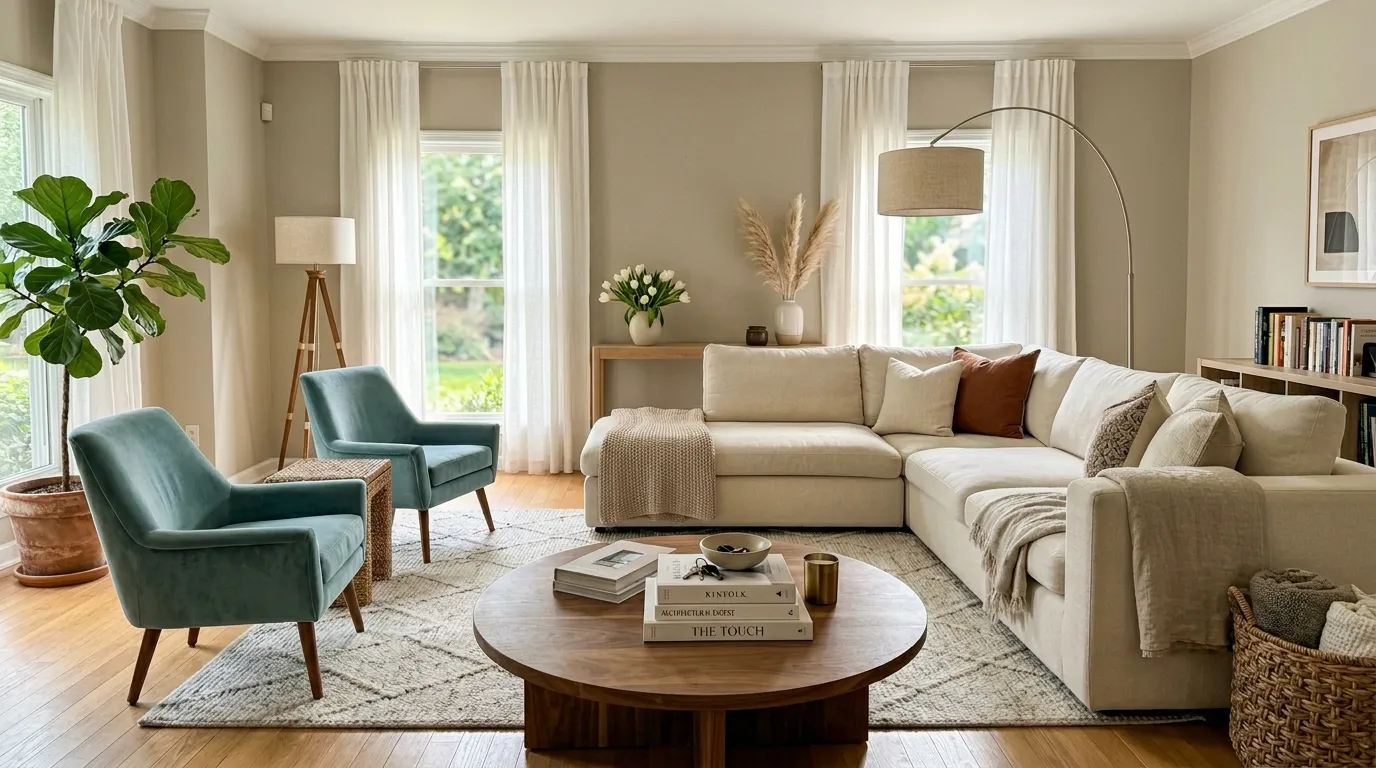
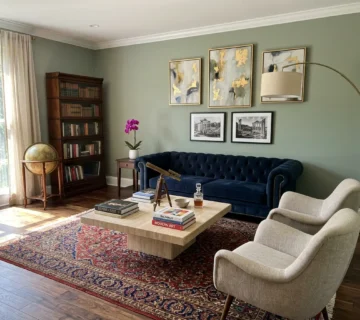
The physical layout of your furniture is one of the most revealing indicators of how connection is valued in your life. Consider the arrangement in the accompanying image: a large, comfortable sectional is balanced by two armchairs, creating a circular flow centered around a coffee table. This layout is implicitly conversational. It invites eye contact and dialogue. In contrast, many modern living rooms default to a single sofa facing a large television, with no auxiliary seating. While there is nothing wrong with enjoying media, a room dedicated solely to passive screen-gazing suggests that entertainment is prioritized over active interpersonal connection. A 'happy' living room usually incorporates flexibility—a place to watch a movie, yes, but also distinct zones or configurations that allow for a board game, a coffee date with a friend, or reading a book while someone else naps on the sofa. The arrangement dictates the behavior; if the furniture doesn't face each other, the people rarely will either.
The Balance of Biophilia: Nature as an Indicator of Nurture
The presence of thriving natural elements in a main living space is a subtle but powerful indicator of a household's capacity for care and patience. The large fiddle leaf fig tree and the vase of fresh tulips seen in the example image aren't just aesthetic props; they are living entities that require consistent attention. Biophilic design—integrating nature into the built environment—has proven psychological benefits, reducing stress and improving cognitive function. A living room populated with healthy plants suggests residents who are engaged with their environment and capable of nurturing something outside themselves. It implies a certain rhythm of life that allows for watering, pruning, and appreciation. Conversely, spaces devoid of life, or filled only with convincing faux alternatives, can sometimes feel static or sterile. While low-maintenance lifestyles are valid, the total absence of organic elements often correlates with a highly transactional, rather than restorative, relationship with one's home.
The Narrative of Objects: Curation Versus Clutter
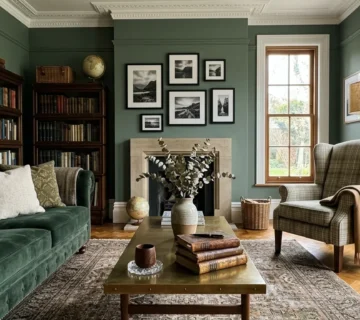
There is a profound psychological difference between a curated space and a cluttered one, though the line can sometimes blur. A happy living room usually strikes a balance, displaying items that hold genuine meaning—books actually read, art that resonates, travel mementos with stories—without becoming overwhelmed by sheer volume. The bookshelves in the image, for instance, are organized but accessible, suggesting intellectual curiosity rather than chaotic hoarding. Chronic clutter is often a physical manifestation of delayed decision-making or internal anxiety; it creates visual noise that keeps the brain in a low-level state of fight-or-flight, inhibiting true relaxation. On the other end of the spectrum, extreme, impersonal minimalism can signal a fear of vulnerability or a desire for excessive control. The sweet spot is a space that feels 'lived-in' and personal, showing evidence of life and history, but maintains enough order to allow the mind to rest.
The Sensory Landscape: Comfort as a Priority
Ultimately, happiness in a home is intrinsically tied to physical comfort. A visually stunning room that you are afraid to sit in is useless for emotional regulation. The living room is where we go to decompress, and its materials should reflect that need. The example image excels here, layering tactile textures: the nubby fabric of the sectional, the softness of the throws, the natural wood grain, and the jute rug. These elements invite touch and signal safety to the nervous system. We should also consider lighting. Harsh, overhead lighting is clinical and agitating. A happy living room utilizes layered lighting—floor lamps, table lamps, and ambient light—to create softer moods suitable for evening relaxation. If a living room prioritizes rigid aesthetics over tactile comfort, it often indicates a life lived more for external validation than for internal contentment. Prioritizing softness is an act of self-care.
Historical Context: From Parlor to Living Room
Understanding the significance of the modern living room requires a brief look at its history. In the 19th and early 20th centuries, many homes featured a 'parlor.' This was a formal space, often the best-decorated room in the house, reserved primarily for receiving guests and displaying status. It was rarely used by the family for daily relaxation. The shift toward the 'living room' (and later the 'family room') marked a significant cultural turning point in the Western world. It represented a democratization of the home, moving away from performative formality toward prioritizing the comfort and actual living habits of the residents. A contemporary living room that is too precious to be used is a regression to the parlor mentality. A truly happy modern home embraces the historical shift, viewing the living room as a space for authentic engagement rather than sterile presentation.
Conclusion
Your living room is a constant feedback loop. You shape it, and in turn, it shapes how you feel and interact every single day. It is not about achieving a magazine-worthy aesthetic, but rather about cultivating an environment that authentically supports the life you want to live. When you walk into your living room, do you feel an immediate sense of exhale? Does the space invite you to connect with others, or does it push you toward isolation or distraction? By critically assessing this central space through the lenses of psychology, comfort, and functionality, you gain a clearer picture of your household's emotional baseline. A happy life doesn't require a perfect room, but it almost always requires an honest one.

No comment