
The Soul’s Signature: Decoding the Silent Language of Your Home Decor
Our homes are far more than mere shelters or containers for our belongings; they are externalized maps of our inner worlds. While we often credit aesthetic preferences or current trends for our design choices, a deeper, more subconscious current drives how we shape our living spaces. Every cushion texture, color palette choice, and furniture arrangement acts as a silent syllable in the language of the self, revealing unseen habits, emotional needs, and profound desires that we may not even fully articulate to ourselves. At "The Home Files," we believe that true design mastery comes not just from arranging beautiful objects, but from understanding the psychological interplay between environment and inhabitant. This deep dive explores how your home serves as a psychological mirror, reflecting the intricate contours of your personality and the unspoken rhythms of your daily life. By learning to read these signs, we can transition from simply decorating to consciously curating spaces that authentically nurture the soul.
The Psychology of the Palette: Emotional Regulation Through Color
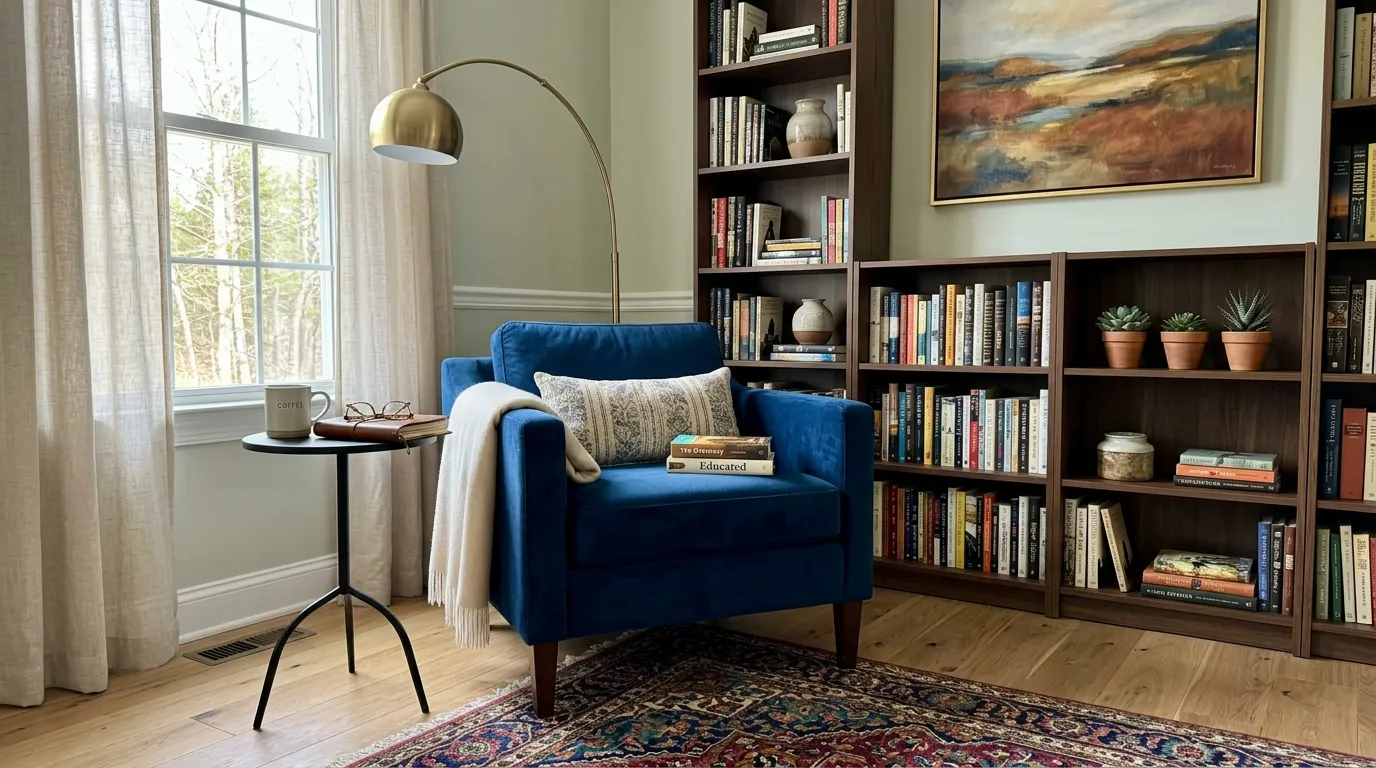
The colors with which we surround ourselves are rarely accidental choices. While we might consciously select a shade because it is 'on-trend' or generally pleasing, the subconscious pull towards specific chromatic environments is often rooted in emotional regulation. Color psychology suggests that our homes act as large-scale mood stabilizers. An individual drawn to muted earth tones, soft greens, and tranquil blues—much like the soothing atmosphere in our featured image—may be subconsciously seeking a counterbalance to a high-stress external world or a highly reactive internal temperament. These tones lower the heart rate and signal safety to the primal brain. Conversely, a home vibrant with high-saturation reds, oranges, or electric yellows might indicate an inhabitant who thrives on external stimulation, seeks to combat lethargy through environmental energy, or possesses an expressive, extroverted nature that demands a dynamic backdrop. Examining the dominant colors in your home offers a window into the emotional states you are trying to cultivate or repress.
The Curated Self: Bookshelves as Identity Markers
Few elements in a home are as revealing as a bookshelf. It is a physical manifestation of the inhabitant's mind—a curated exhibit of past interests, present studies, and future aspirations. As seen in the featured image, where well-stocked shelves flank a cozy reading spot, these collections are not mere storage; they are identity markers. The contents reveal intellectual curiosity, but the *way* they are displayed speaks to personality traits. Books organized meticulously by genre or color suggest a need for external order to manage internal chaos, pointing to a conscientious, perhaps perfectionistic nature. Conversely, overflowing shelves with varied titles stacked haphazardly may indicate an open-minded, creative thinker who prioritizes the acquisition of ideas over rigid structure. Furthermore, the objects interspersed among the books—travel souvenirs, inherited trinkets, awards—serve as totems of personal history and achievement, anchoring the inhabitant's sense of self within the space. They are the tangible evidence of a life lived.
The Architecture of Interaction: Layout and Social Habits
The arrangement of furniture is the choreography of daily life. It dictates movement, gaze, and interaction, subtly revealing the inhabitant's social energy and relationship habits. A living room where all seating is oriented towards a large television suggests a household that prioritizes parallel relaxation and entertainment over direct conversation. In contrast, a space featuring two sofas facing each other, or a grouping of armchairs arranged in a tight circle, indicates a deep desire for connection, conversation, and communal gathering. The presence of distinct 'zones'—like the solitary reading nook shown in the featured image—reveals a crucial need for autonomy and restorative solitude within the home environment. This architectural body language tells us whether the homeowner recharges through social engagement or private reflection, and whether their habits lean towards communal living or independent co-existence.
Tactile Craving: Texture as Emotional Support
While design is often treated as a purely visual medium, the tactile experience of a home is paramount to its psychological impact. Our subconscious craving for specific textures is directly linked to our need for comfort and security. A home layered with plush throws, velvet upholstery (like the chair in the featured image), deep-pile rugs, and soft linens points to a high need for sensory soothing. These textures act as an adult equivalent of a security blanket, providing a physical embrace that can alleviate anxiety and feelings of vulnerability. On the other end of the spectrum, an inhabitant who prefers sleek surfaces, exposed metals, minimalist concrete, and cool leather may be seeking mental clarity through environmental austerity. For them, physical softness might feel cluttered or overwhelming; they find psychological comfort in clean lines and hard, predictable surfaces that mirror a desire for control and efficiency.
The Sanctuary Imperative: The Need for Retreat
In an era of constant digital connectivity and blurring work-life boundaries, the psychological need for a dedicated sanctuary space within the home has never been greater. The image provided perfectly illustrates this concept: a singular armchair, good lighting, and tools for analog engagement (books, journal, coffee). This specific setup is a powerful indicator of a person who recognizes their need to consciously disconnect and re-center. It is a physical boundary set against the demands of the outside world. The existence of such a space signifies an inhabitant who practices self-preservation through intentional withdrawal. A lack of private nooks in a large family home, conversely, might indicate a suppression of individual needs in favor of the collective, or a struggle to establish necessary psychological boundaries.
Illuminating the Psyche: Lighting as Mood Control
How a person chooses to light their home is one of the most direct ways they attempt to manipulate their own neurochemistry. Lighting is intrinsically linked to our circadian rhythms and the production of melatonin and serotonin. A reliance on harsh, bright overhead lighting often correlates with a utilitarian mindset, a focus on task completion, and perhaps a discomfort with stillness or ambiguity. Conversely, a home that relies heavily on secondary lighting—floor lamps with warm bulbs (like the brass arc lamp in the photo), dimmers, and candlelight—suggests an inhabitant actively seeking to down-regulate their nervous system. They are using light to create artificial sunsets, signaling to their brains that it is time to rest and soften. This preference for ambient, moody lighting reveals a deep-seated desire for tranquility, intimacy, and emotional safety.
The Biophilic Connection: Seeking Grounding Through Nature
The inclusion of natural elements in home decor—plants, untreated wood, stone, natural fibers—is more than a stylistic choice; it is an expression of biophilia, the innate human tendency to seek connections with nature. In modern, urbanized living environments, we often suffer from a disconnect with the natural world, which can lead to subconscious stress. A home filled with thriving houseplants, like the succulents on the shelves in the featured image, or rich wood grains in furniture and flooring, indicates an inhabitant consciously or unconsciously attempting to bridge this gap. These elements introduce organic fractals and living energy into static indoor spaces, having a measurable stress-reducing effect. A strong presence of biophilic design elements signals a deep desire for grounding, growth, and a connection to life rhythms outside of the human-constructed rat race.
Conclusion
Ultimately, decoding your home is an act of profound self-discovery. There is no right or wrong way for a home to 'speak'; there is only authenticity. By observing your space with the detached eye of a psychologist, you can begin to understand the silent drivers behind your choices—why you need that specific shade of blue, why you cluster your collections just so, or why a particular chair is your undisputed favorite. This awareness allows you to move from unconscious habit to conscious creation. When you understand the soul's signature written across your rooms, you can begin to edit your environment to not just reflect who you are today, but to actively support who you wish to become tomorrow.

No comment