
We blend human expertise with the intelligence of advanced AI design software to bring you inspired, detail-driven interior concepts every time.
Our homes are far more than mere shelters made of wood, brick, and mortar; they are living, breathing physical manifestations of our innermost selves. Every cushion we plump, every piece of art we hang, and even the clutter we choose to ignore tells a silent, yet profound story about who we are, what we value, and how we navigate the world. This "unspoken autobiography" is written not in words, but in the language of space, color, texture, and objects. Often, the choices we make in our domestic environments are guided by subconscious desires for comfort, security, aspiration, or self-expression. By learning to read our own homes, we embark on a fascinating journey of self-discovery, uncovering the layers of our personality that are reflected back to us from our everyday surroundings. In this deep dive, we explore the intricate psychological connection between our minds and our living spaces, revealing how to decode the narrative your home is continuously writing about you.
The Psychology of 'Place Identity': How Your Personality Shapes Your Space
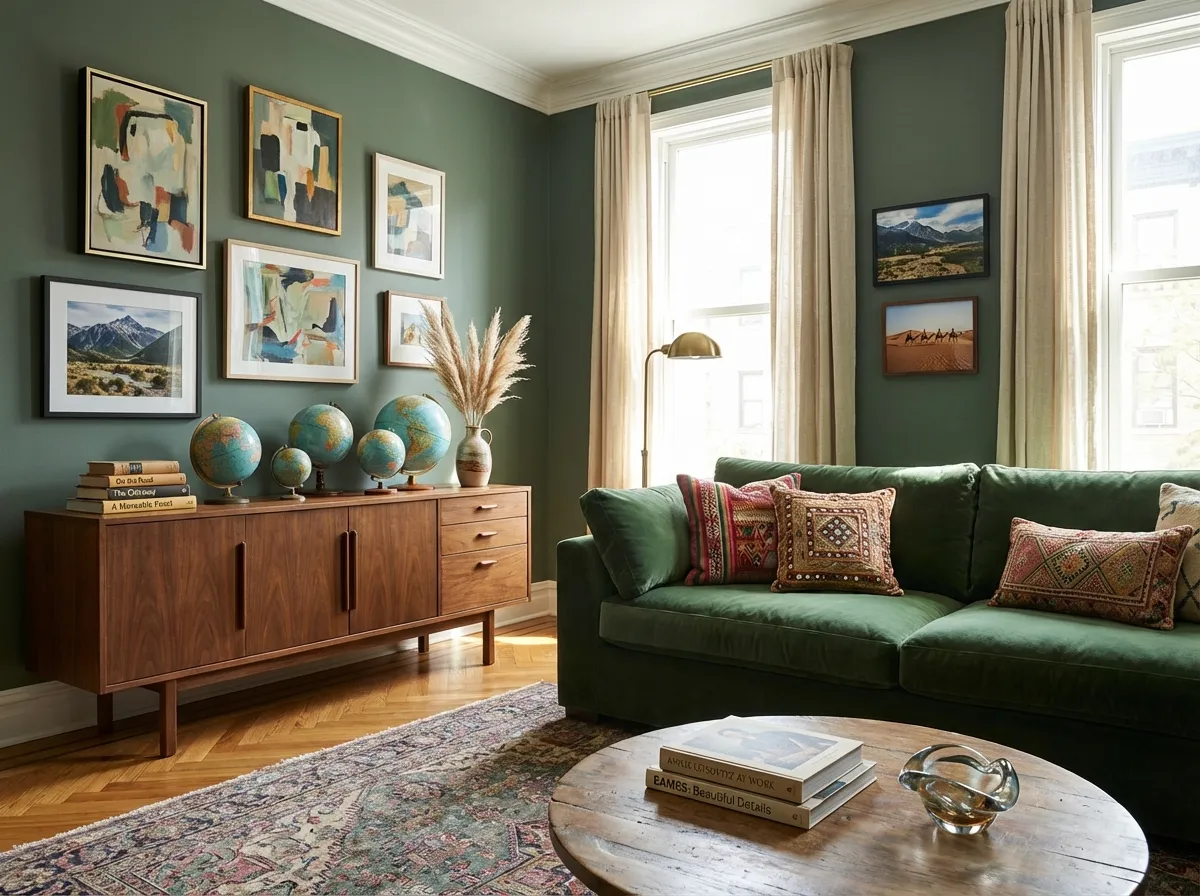
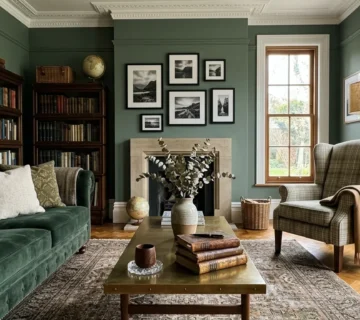
At the heart of understanding how our home reflects us is the psychological concept of 'place identity.' This theory suggests that our physical environment is an integral part of our self-concept. Just as we identify with our profession, relationships, or hobbies, we also identify with the spaces we inhabit. This is why a home that feels 'right' can profoundly positively impact our well-being, while a space that feels misaligned can cause subtle, ongoing stress. Our personality traits play a significant role here. For instance, an individual high in openness to experience might be drawn to eclectic decor, unusual art, and a variety of cultural artifacts—much like the curated collection seen in our featured image. Conversely, someone high in conscientiousness might prioritize order, minimalism, and highly functional layouts. Understanding your own place identity allows you to make conscious design choices that not only look good but also nurture your psychological needs, creating a sanctuary that truly supports who you are.
The Curated vs. The Authentic Self: Navigating the Tension Between 'Show' and 'Tell'
In an era dominated by social media, there is an undeniable pressure to curate a 'magazine-worthy' home. This can create a tension between the 'curated self' we wish to present to the world and the 'authentic self' that lives in the space when the cameras are off. The most compelling homes, however, are those that strike a balance. They are not sterile showrooms but lived-in spaces that embrace a degree of beautiful chaos. True authenticity in design comes from allowing your home to be a functional backdrop for your real life, not just a stylized vignette. It’s the difference between buying a set of color-coded books for aesthetic purposes and having a shelf overflowing with dog-eared paperbacks you’ve actually read and loved. A home that narrates your truest self isn't afraid to show signs of life—a forgotten coffee cup, a pile of mail, or a well-worn armchair—because these details are the genuine fingerprints of your daily existence.
Objects as Emotional Anchors: The Profound Weight of What We Keep
Our possessions are rarely just 'stuff'; they are often imbued with significant emotional weight, serving as physical anchors to memories, relationships, and past versions of ourselves. The vintage globes lined up on the credenza in the provided image are likely more than mere decoration; they might represent a love of travel, a cherished inheritance, or an aspirational desire to explore the world. When we choose to display certain items, we are effectively spotlighting specific chapters of our life story. A gallery wall of personal photographs or eclectic art is a direct visual representation of what we hold dear. Conversely, the things we hide away in closets or boxes also tell a story—perhaps of unresolved emotions, past burdens, or parts of ourselves we are not ready to confront. Examining *why* you keep certain objects can provide profound insights into your emotional landscape and help you curate a home that reflects your values.
The Silent Language of Color and Texture: Decoding Your Sensory Preferences
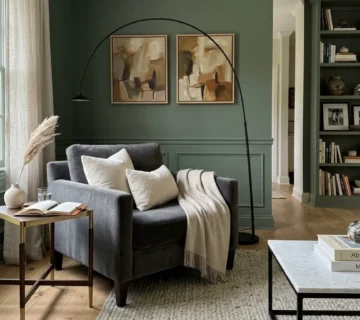
The sensory experience of a home—the colors we see and the textures we feel—is a powerful, non-verbal language that communicates our emotional needs and states. Color psychology is a well-established field, and the palette you choose is rarely arbitrary. For example, the dominant, deep green wall in the image is often associated with balance, growth, harmony, and a connection to nature. It suggests a desire for a restful and grounding environment. Similarly, textures play a crucial role in comfort. The juxtaposition of a plush velvet sofa against a rustic wooden coffee table and a woven rug speaks to a need for both tactile softness and organic warmth. These choices reflect how we want to *feel* in our space. Do you crave the stimulating energy of bright colors, or the calm of muted tones? Do you need the comforting embrace of soft fabrics, or the clean lines of sleek surfaces? Your sensory choices are a direct reflection of your inner emotional regulation needs.
The Choreography of Layout: How Your Furniture Arranges Your Life
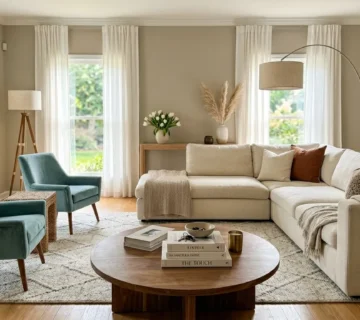
Beyond aesthetics, the physical layout of furniture dictates the 'choreography' of your daily life, influencing how you interact with others and how you spend your time. A living room where sofas and armchairs are arranged facing each other creates a 'sociopetal' space that encourages conversation and connection. This is evident in the inviting setup of the image provided, which is designed for gathering. In contrast, a room where all seating is oriented towards a television creates a 'sociofugal' space, prioritizing passive entertainment over direct engagement. Consider your own home: Does your kitchen layout invite family members to gather and cook together, or is it a solitary workspace? Does your bedroom design promote rest and intimacy, or is it cluttered with distractions like a home office desk? By analyzing the flow of your home, you can see how your environment is subtly shaping your habits and relationships, and make adjustments to better align your space with your desired lifestyle.
The Evolution of Home: Tracing Your Personal Growth Through Changing Spaces
Our homes are not static; they evolve in tandem with our lives. A person's living space in their early twenties—perhaps a shared apartment filled with hand-me-down furniture and aspirational posters—tells a very different story than the home they inhabit in their forties or sixties. These shifts in our domestic environments mirror our personal growth, changing priorities, and life stages. The transition from a minimalist bachelor pad to a family home filled with toys and durable fabrics reflects a shift from individual focus to communal living. Later, downsizing might represent a desire for simplicity and freedom from material burdens. Looking back at the homes you've lived in provides a fascinating timeline of your personal development. Each space was a cocoon that supported a specific version of you, and recognizing this evolution can bring a deep sense of appreciation for your journey and help you plan for the future home that will support your next chapter.
The Unconscious Reveals: What the Overlooked Details Say About You
While we may meticulously curate our living rooms and dining areas for guests, the true, unfiltered story of our lives is often found in the more private or functional spaces—the closets, the junk drawer, the garage, or inside the refrigerator. These are the areas where our guard is down and our unconscious habits take over. A perfectly organized bookshelf in the living room might project an image of intellectual order, but a chaotic, overflowing bedroom closet might reveal an inner struggle with decision-making or a reluctance to let go of the past. The state of your entryway—is it a welcoming, organized transition zone, or a chaotic dumping ground for shoes and bags?—speaks volumes about how you handle the transition from the outside world to your inner sanctuary. Paying attention to these overlooked details can offer the most honest and sometimes surprising insights into your current state of mind and areas where you might need more support or organization.
Conclusion
Your home is an ongoing dialogue between your inner world and your outer reality. It is a space where you can be your most vulnerable, authentic self, free from the judgment of the outside world. By learning to interpret the silent language of your home—from the psychology of your color choices to the emotional weight of your possessions—you gain a powerful tool for self-reflection. This process is not about critiquing your decor or striving for perfection; it is about cultivating a deeper understanding and compassion for yourself. As you continue to evolve, so too will your home, forever remaining a fascinating, unspoken autobiography of your life's journey. Take a moment today to look around your space with fresh eyes and listen to the story it is telling.

No comment